To clean lead dust safely, start by sealing off the contaminated area with plastic sheeting to contain dust. Use a high-efficiency vacuum with a HEPA filter to vacuum all surfaces systematically, working from top to bottom. Follow up with damp wiping to pick up any remaining dust. Always wear protective gear, control airflow, and dispose of vacuum contents properly. If you keep going, you’ll discover more essential steps to guarantee thorough, safe cleanup.
Key Takeaways
- Seal off contaminated areas with plastic sheeting to contain lead dust during vacuuming.
- Use a HEPA-filter vacuum and vacuum systematically from top to bottom surfaces.
- Damp wipe surfaces after vacuuming to remove residual lead dust effectively.
- Dispose of vacuum bags and filters in sealed plastic bags to prevent dust escape.
- Wear personal protective equipment and maintain proper ventilation throughout the process.
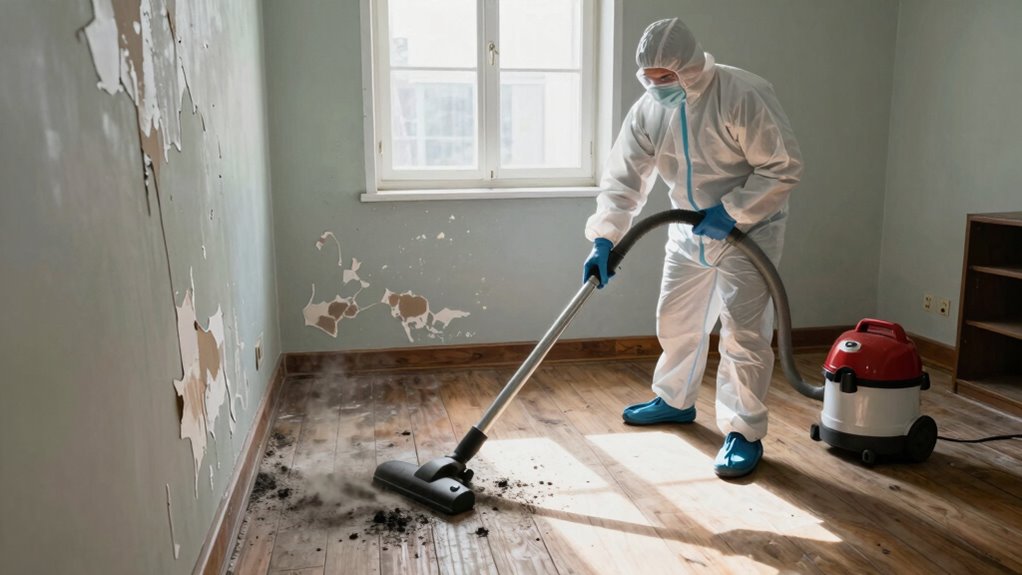
Lead dust cleanup is essential for protecting your health, especially in homes built before 1978 where lead-based paint was common. When you’re tackling lead dust, proper procedures ensure that hazardous particles don’t spread further, keeping you and your family safe. The cornerstone of effective cleanup is lead dust containment. You want to prevent the dust from migrating to other areas, which means sealing off contaminated zones with plastic sheeting, creating barriers, and carefully controlling airflow. This prevents cross-contamination and makes your cleanup more efficient.
Lead dust containment is key to safe, effective cleanup in older homes.
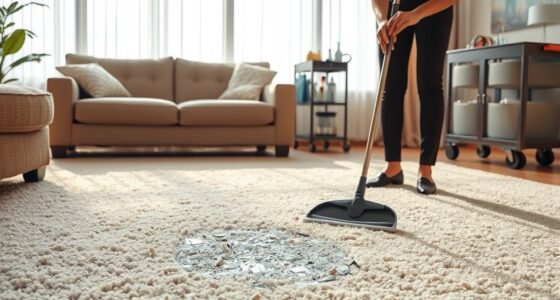
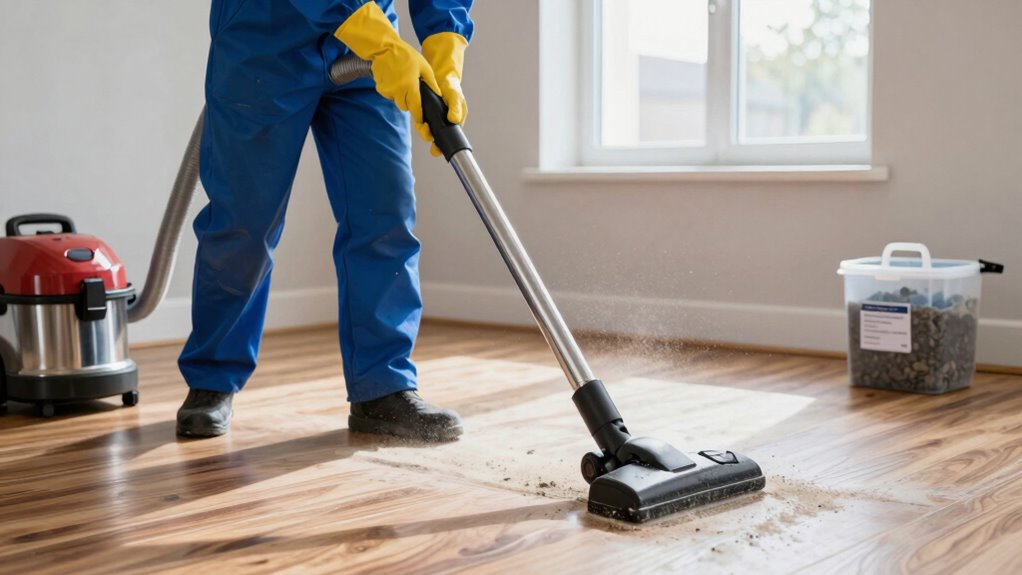
Once containment measures are in place, your focus shifts to vacuum filtration techniques. Using a high-efficiency vacuum cleaner equipped with a HEPA filter is crucial because ordinary vacuums can simply spread lead dust around. HEPA filters trap tiny particles, including lead dust, preventing them from being released back into the air. When vacuuming, you should use a systematic approach—start from the top of the room and work your way down, ensuring you cover all surfaces, including floors, window sills, and furniture. Make sure to move slowly and methodically, allowing the vacuum ample time to pick up dust without kicking up debris into the air.
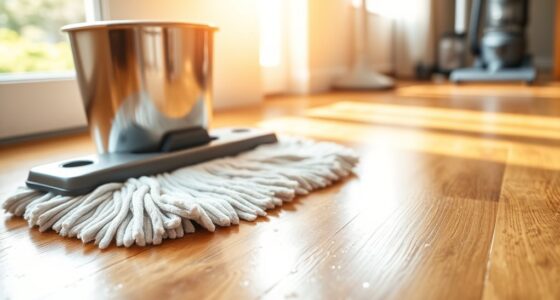
It’s important to remember that vacuuming alone isn’t enough. You should also use damp cleaning methods, like wiping surfaces with a damp cloth or a specialized lead-cleaning wipe, to pick up residual dust. These steps, combined with your vacuuming efforts, greatly reduce the risk of lead exposure. After vacuuming, carefully dispose of the vacuum bag or filter in sealed plastic bags, preventing any trapped lead dust from escaping during disposal. This step is essential for maintaining lead dust containment throughout the entire process.
Throughout the cleanup, always wear appropriate personal protective equipment, such as gloves and a respirator, to avoid inhaling or touching lead dust. Maintain good ventilation by opening windows or using air purifiers with HEPA filters to further reduce airborne lead particles. Regularly monitoring air quality can also help ensure that lead levels stay within safe limits, which is an important aspect of lead dust mitigation. Remember, the key to a successful lead dust cleanup is consistency and attention to detail. Properly containing dust, employing effective vacuum filtration techniques, and following a careful cleaning sequence will help guarantee your environment becomes safer and lead-free. Taking these steps seriously safeguards your health and provides peace of mind, knowing you’ve done everything possible to remove dangerous lead dust from your home.

Commercial Heated Carpet & Upholstery Extractor Machine, 160 PSI Hot Water Cleaner, 1.34 HP Vacuum, 149°F Heater, 4.8-Gal and 5.3-Gal Dual Tanks for Auto Detailing, Furniture & Carpet
Heated Deep Cleaning Performance: Powered by a 1.34 HP (1000 W) vacuum motor and 160 PSI solution pump,...
As an affiliate, we earn on qualifying purchases.
Frequently Asked Questions
How Often Should Lead Dust Cleanup Be Performed?
You should perform lead dust cleanup at least every three months, or more frequently if recommended by lead dust regulations. Regular cleanup guarantees safe living conditions and reduces health risks. Follow proper cleanup scheduling to maintain compliance and safety. If you notice increased dust or deterioration in paint, consider more frequent cleanings. Staying consistent with your cleanup routine helps protect your household, especially if young children or pregnant women are present.
Are Special Vacuums Required for Lead Dust Removal?
Did you know that improperly cleaned lead dust can linger for years, posing serious health risks? You should use special vacuums designed for lead dust removal to guarantee proper lead dust containment. These vacuums meet strict vacuum filtration standards, preventing lead particles from escaping into the environment. Regular household vacuums aren’t sufficient, so investing in the right equipment is essential for safe, effective cleanup.
Can I Clean Lead Dust Without Professional Help?
You can clean lead dust yourself, but you must take proper precautions because of lead dust hazards. Use a HEPA vacuum designed for lead dust removal and wear protective gear like gloves, masks, and disposable coveralls. Avoid sweeping or dry dusting, which can spread contamination. Follow DIY cleaning precautions carefully, and consider consulting professionals if you’re unsure or if the area is heavily contaminated to guarantee safety and proper cleanup.
What Safety Gear Is Necessary During Cleanup?
Are you prepared to protect yourself during cleanup? You’ll need protective gear like disposable gloves, a respirator mask rated for lead dust, and disposable coveralls to prevent contamination. Wearing these safeguards not only shields you from lead particles but also helps prevent spreading contamination to other areas. Do you want to ensure your safety and effectively reduce lead dust risks? Proper protective gear is essential for safe, effective cleanup.
How Do I Dispose of Contaminated Vacuum Bags Properly?
You should carefully seal the vacuum bag containing contaminated waste in heavy-duty plastic, ensuring it’s tightly secured to prevent leaks. Label the bag as hazardous and follow your local regulations for vacuum bag disposal. During contaminated waste handling, wear gloves and a mask to protect yourself. Take the sealed bag to a designated disposal facility promptly, avoiding any contact with other waste to prevent lead dust spread.

Bissell Commercial Bissell BigGreen Commercial BG10 Deep Cleaning 2 Motor Extractor Machine
Country Of Origin : China
As an affiliate, we earn on qualifying purchases.
Conclusion
Remember, cleaning lead dust is like tending a fragile garden—you must approach each step with care and patience. By following the safe vacuuming sequence, you’re not just removing dust; you’re nurturing the hope of a healthier home. Every careful sweep symbolizes a fresh start, where safety blooms anew. Stay vigilant and gentle, knowing your efforts protect your loved ones and preserve the promise of a safer, cleaner future.

Commercial Carpet Cleaner Extractor 10-Gal Solution Tank 8-Gal Recovery Tank, 18” Cleaning Path, Low Noise Powerful Carpet Cleaner for Hotels, Offices, Large Areas & Professional Use
Powerful Deep Cleaning – Equipped with a 900 RPM motor and 1400W power, this commercial-grade carpet extractor effectively...
As an affiliate, we earn on qualifying purchases.

Mytee S300-H Tempo Heated Spotter - 1 Gallon Unit - Heated Carpet Extractor - Interior Carpet Maintenance (S-300H Heated Tempo)
Performance – It features one of most powerful vacuum motors in its class, producing 85” of water lift...
As an affiliate, we earn on qualifying purchases.