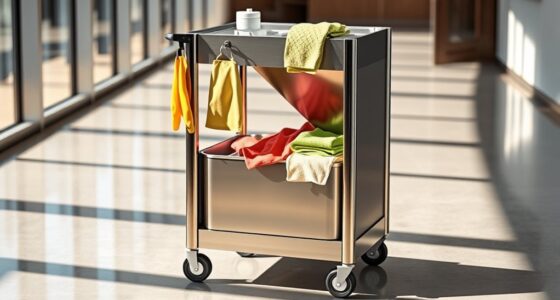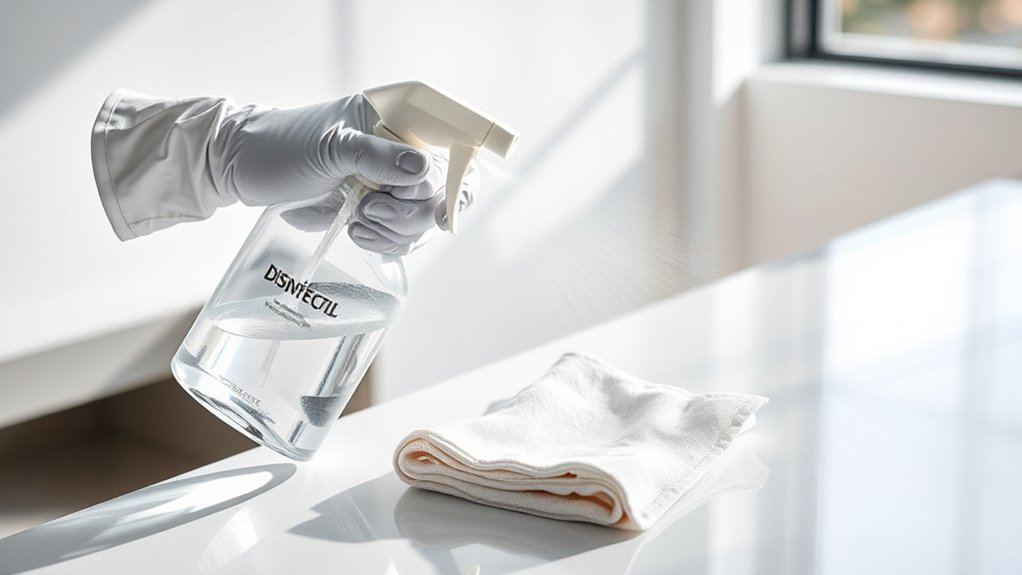

Understanding the difference between cleaning and disinfection is key to effective hygiene. Cleaning removes dirt, dust, and some germs but doesn’t necessarily kill bacteria or viruses. Disinfection uses chemicals to eliminate remaining microorganisms, but it only works well if surfaces are cleaned beforehand. Proper surface maintenance combines both steps, especially in high-touch areas or healthcare settings. Keep exploring to learn how mastering these processes helps protect your health and reduce the risk of illness.
Key Takeaways
- Cleaning removes dirt and debris, while disinfection kills germs and bacteria on surfaces.
- Proper cleaning is essential before applying disinfectants for maximum effectiveness.
- Disinfection targets microscopic organisms, reducing the risk of cross-contamination and illness.
- Not all surfaces require disinfection; high-touch and contaminated areas need regular disinfection.
- Combining cleaning and disinfection creates a safer, healthier environment by reducing microbial presence.
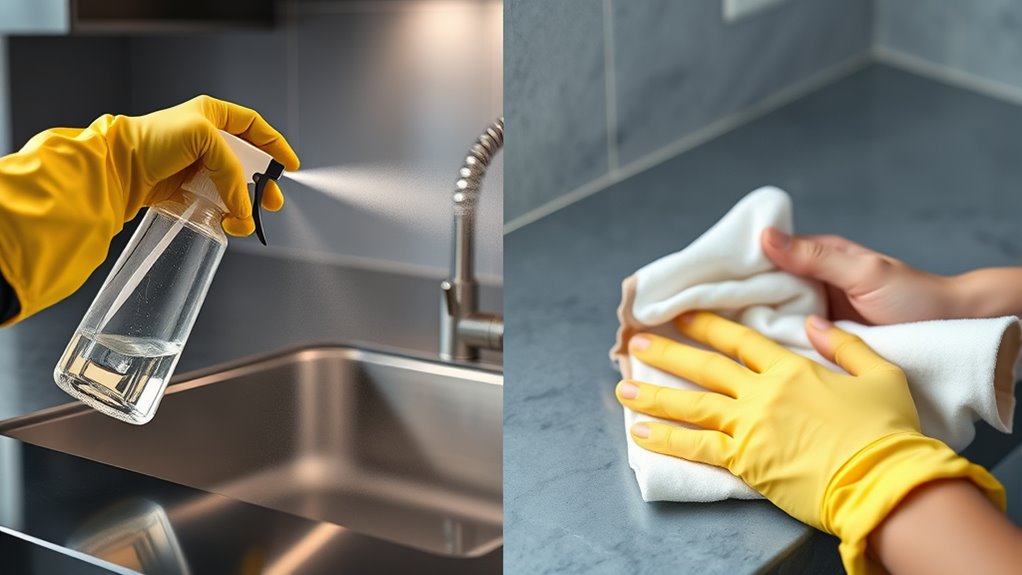
Understanding the difference between disinfection and cleaning is vital for maintaining a healthy environment. When it comes to germ removal and surface maintenance, knowing what each process accomplishes helps you make informed decisions to keep your space safe and hygienic. Cleaning involves removing dirt, dust, and some germs from surfaces, but it doesn’t necessarily kill the bacteria and viruses that might be lingering. It’s the first step in surface maintenance because it clears away debris that can harbor germs, making subsequent disinfection more effective. If you simply wipe a surface with soap and water, you’re reducing dirt and some microbes, but you’re not eliminating the pathogens that could cause illness.
Disinfection takes cleaning a step further by applying chemical agents designed specifically to kill germs. This process is vital in environments where controlling the spread of infectious diseases is a priority, such as in healthcare settings, kitchens, or during flu season. When you disinfect, you are targeting the microscopic organisms that cleaning might leave behind, markedly reducing the risk of cross-contamination. It’s important to remember, though, that disinfection is only effective if you first clean the surface properly. Dirt and grime can shield germs from disinfectants, preventing them from doing their job effectively. That’s why surface maintenance should always start with cleaning before disinfecting.
In everyday life, not every surface needs to be disinfected regularly. High-touch areas like doorknobs, light switches, and countertops benefit from routine disinfection because they’re touched frequently and can harbor a variety of germs. Conversely, surfaces that aren’t exposed to dirt or contact with hands, such as walls or decorative items, may only need ongoing cleaning. When you’re trying to prevent illness, it’s essential to understand which surfaces require disinfection and which are adequately maintained through cleaning alone. Using the right method at the right time ensures an effective strategy for germ removal without unnecessary use of chemicals.
Ultimately, surface maintenance involves a combination of cleaning and disinfecting, tailored to the specific needs of your environment. Cleaning reduces the microbial burden by removing dirt and some germs, while disinfecting kills the remaining pathogens. By understanding this distinction, you can better protect yourself and those around you. Proper surface maintenance isn’t just about appearance; it’s about creating a safer, healthier space. Whether you’re cleaning your home or managing a commercial environment, knowing when and how to disinfect ensures germs are effectively removed, promoting overall health and well-being. Understanding the role of contrast ratio can help you optimize your cleaning and disinfection efforts for better visual and hygienic results.

Lysol All Purpose Cleaner Spray, Multi-Purpose Disinfecting Spray, Kitchen & Bathroom Cleaner, Lemon Breeze Scent, 32 Fl Oz
- Kills 99.9% of Viruses and Bacteria: Includes COVID-19 virus protection
- Deep Cleans Germs and Grime: Removes soap scum, grease, and grime
- Multi-Surface Disinfectant: Suitable for counters, sinks, stoves, and more
As an affiliate, we earn on qualifying purchases.
As an affiliate, we earn on qualifying purchases.
Frequently Asked Questions
How Often Should I Disinfect My Home Surfaces?
You should disinfect your home surfaces at least once a day, especially high-touch areas like doorknobs, light switches, and countertops. Incorporate surface maintenance into your routine scheduling to prevent germs from spreading. If someone in your household is sick or if surfaces are visibly dirty, disinfect more frequently. Regular disinfection helps keep your home safe, promoting a healthier environment for everyone.
Can Cleaning Eliminate All Germs and Bacteria?
In a sense, cleaning can’t eliminate all germs and bacteria, much like trying to clear out a speakeasy with just a mop. While regular cleaning removes dirt and some germs, it doesn’t fully guarantee germ elimination or bacteria removal. To truly reduce harmful microbes, you need to disinfect surfaces. So, cleaning alone isn’t enough to guarantee a germ-free environment; disinfecting is essential for thorough bacteria removal.
What Are the Health Risks of Improper Disinfection?
If you don’t disinfect properly, you risk exposing yourself to germs that develop resistance, making them harder to eliminate over time. You might also face health dangers from chemical exposure if you use harsh disinfectants incorrectly or excessively. These risks can lead to infections or respiratory issues. To stay safe, always follow proper disinfection protocols and use the right products in recommended amounts to minimize health hazards.
Are Natural Cleaning Products as Effective as Chemical Disinfectants?
Natural alternatives can be effective, but their disinfectant efficacy varies depending on the product and application. You might find some natural options, like vinegar or tea tree oil, work well for cleaning surfaces, but they may not eliminate all germs as reliably as chemical disinfectants. If you need strong germ control, especially during illness, it’s best to use proven disinfectants. For everyday cleaning, natural products can be a safer, eco-friendly choice.
How Do I Choose Between Cleaning and Disinfection for Different Areas?
You should choose cleaning for general surface maintenance and disinfecting for high-touch areas, especially in spaces prone to infections like norovirus or influenza. Consider surface material—porcelain or stainless steel often need disinfectants, while fabric might just require cleaning. Statistically, thorough disinfection can reduce infection risk by up to 80%. Always evaluate the infection types and material to determine whether cleaning or disinfection best suits each area.
Conclusion
Now that you know the difference between disinfection and cleaning, you’re equipped to make smarter choices. Think of cleaning as sweeping away the shadows, while disinfection is the sword that kills lurking germs. Remember, each has its role—like night and day in your cleaning routine. So, embrace the knowledge, and let your space shine brighter and safer, turning your home into a fortress where germs fear to linger. Your clean, healthy sanctuary awaits!