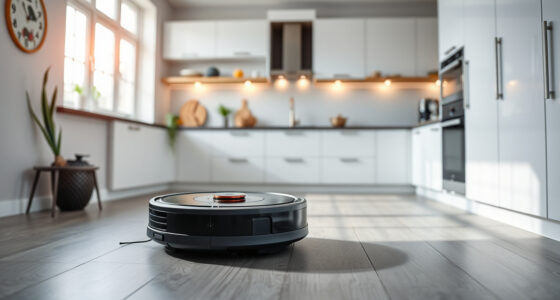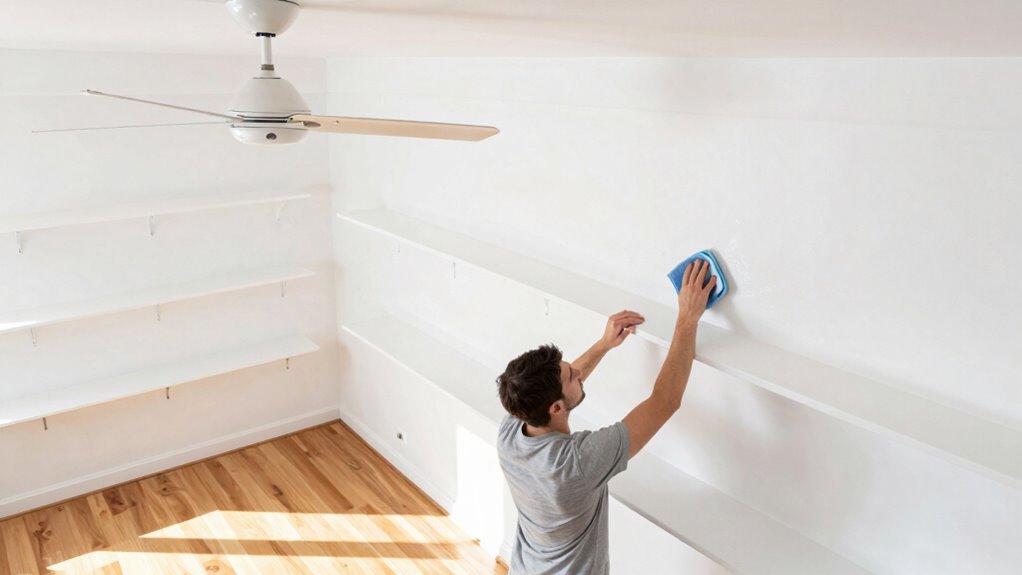
The top-to-bottom cleaning principle works because gravity helps manage dust and dirt. When you start at high surfaces, loose debris naturally falls downward onto lower areas, making cleanup easier and more effective. This method prevents spreading dust onto already cleaned surfaces and reduces rework. By following this logical order, you guarantee a thorough job with less effort. If you want to understand how physics supports this approach, keep exploring the details.

Get cleaning gear delivered free with Prime
- Fast, free delivery on millions of items
- Prime Video, Amazon Music and more included
- Member-only deals all year
Key Takeaways
- Gravity causes dust and debris to fall downward, guiding the cleaning process from top to bottom.
- Starting at high surfaces prevents redistributing loosened dirt onto already cleaned lower areas.
- Cleaning from top to bottom efficiently manages settled dust, reducing recontamination.
- Following the natural physics of gravity minimizes the need for re-cleaning and saves time.
- The sequence ensures thorough cleaning by systematically removing dust and dirt based on physical principles.

When it comes to cleaning, the top-to-bottom principle is more than just a common rule—it’s backed by a simple yet effective logic. This method ensures you clean efficiently and avoid redoing work. By starting at the highest point and working downward, you take advantage of gravity to manage dust removal and surface residue collection. When you dust or wipe from the top, loose dirt and dust fall naturally to lower surfaces, making cleanup easier and more thorough. This way, you don’t have to go back and clean the same spots twice because debris has already been displaced downward.
As you work from top to bottom, you prevent dust and dirt from settling on already cleaned areas. For example, when you wipe a high shelf or ceiling fan first, any dust you disturb will fall onto the surfaces below. If you then move downward, you won’t risk spreading dust back onto freshly cleaned surfaces. This approach is especially effective on horizontal surfaces like countertops, tables, or floors, where surface residue tends to settle. When you clean high surfaces first, the debris naturally falls onto lower surfaces, which you plan to clean last, ensuring you don’t spread dirt around needlessly.
In addition, this principle helps you manage dust removal more effectively. Dust particles tend to settle on surfaces due to gravity, so starting from the highest points minimizes the chances of redistributing dust onto areas you’ve already cleaned. Using a duster or microfiber cloth at the top and working your way down captures most of the loose particles before they have a chance to settle elsewhere. When you move downward, you also gather residual surface residue that has fallen to lower levels, preventing it from accumulating or being redistributed. Incorporating tools that enhance dust capture can further improve your cleaning results. Plus, understanding the physics of dust reinforces why gravity plays such an important role in effective cleaning.
Furthermore, working from top to bottom streamlines your cleaning process, making it less chaotic. You’re less likely to forget or overlook areas because your workflow naturally follows gravity and dust behavior. This logical sequence saves you time and effort, reducing the need for backtracking and re-cleaning. It also creates a cleaner environment overall, with less dust and surface residue lingering after your cleaning session.
Additionally, understanding the physics of dust helps to reinforce why this method is so effective. In short, the top-to-bottom cleaning principle isn’t just about following a rule—it’s about applying an effective strategy rooted in physics and practicality. It simplifies dust removal, manages surface residue better, and ensures you leave your space truly clean. When you adopt this approach, you’re not only improving your cleaning efficiency but also prolonging the life of your surfaces by preventing unnecessary dirt buildup.
Products Worth Considering

Dyson Airwrap i.d. Multi-Styler for Straight and Wavy Hair

LG 77-Inch OLED evo C6 4K Smart TV
Roborock RockMow X130H Wire-Free 4WD Robot Lawn Mower
As an affiliate, we earn on qualifying purchases.
Frequently Asked Questions
How Does Gravity Influence Cleaning From Top to Bottom?
Gravity effect makes cleaning from top to bottom effective because it pulls dirt downward, preventing it from spreading back onto cleaned surfaces. As you wipe or sweep, dirt naturally redistributes downward, so starting at the top guarantees you don’t re-contaminate areas already cleaned. This method takes advantage of gravity, reducing dirt redistribution and making your cleaning more thorough and efficient.
Can Top-To-Bottom Cleaning Be Effective for All Types of Surfaces?
Cleaning from top to bottom is like peeling layers off an onion, but its effectiveness depends on surface durability and cleaning frequency. For delicate surfaces, you might need gentler methods, making top-to-bottom less ideal. However, for sturdy surfaces, it usually works well because dirt and dust naturally fall downward. Regular cleaning helps maintain effectiveness, ensuring you don’t miss hidden grime or cause damage.
What Tools Are Best Suited for a Top-To-Bottom Cleaning Approach?
You should use equipment essentials like microfiber cloths, dusters, and vacuum cleaners suited for various surfaces. These tools help you follow cleaning schedules efficiently from top to bottom, ensuring dirt and dust fall downwards. A sturdy ladder or extendable duster can reach high spots. Using the right tools makes your top-to-bottom approach more effective, saving time while maintaining thorough cleanliness across all surfaces.
How Long Does a Typical Top-To-Bottom Cleaning Process Take?
A typical top-to-bottom cleaning takes about one to three hours, depending on your space size and cleaning schedule. You’ll want to allocate time for dusting, vacuuming, mopping, and organizing, all while managing your time efficiently. Prioritize tasks, stay focused, and stick to your cleaning schedule. This approach helps you maximize productivity, keep your space tidy, and maintain effective time management, making cleaning less overwhelming and more manageable.
Are There Any Common Mistakes to Avoid When Cleaning Top to Bottom?
When cleaning top to bottom, avoid common mistakes like neglecting dust removal from high surfaces, which can cause dirt to fall onto already cleaned areas. Also, be mindful of stain prevention by treating spots early before wiping down surfaces. Rushing through the process can lead to missed spots or pushing dust and dirt around. Take your time, work systematically, and always start from the top to guarantee a thorough, streak-free clean.
Conclusion
Imagine you’re sweeping a dusty floor, starting from the top shelf down to the baseboards. That’s exactly how cleaning from top to bottom works—gravity and dirt’s natural tendency to fall make your efforts more effective. When you clean this way, you prevent re-soiling already cleaned areas. Think of it as pouring water into a sinking boat; addressing the highest point first stops the mess from spreading. Follow this principle, and your cleaning becomes smarter and more efficient.