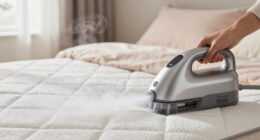
To prevent re-soiling right after cleaning, apply a stain-resistant coating suitable for your surfaces to block stains and liquids. Use pet deterrent sprays to keep pets from revisiting cleaned areas, and place barriers or rugs to limit foot traffic. Keep the area dry with proper ventilation and moisture control. Regular maintenance, like vacuuming and spot cleaning, also helps. For more tips on maintaining a clean look, you’ll find helpful strategies if you continue exploring further.

Get cleaning gear delivered free with Prime
- Fast, free delivery on millions of items
- Prime Video, Amazon Music and more included
- Member-only deals all year
Key Takeaways
- Apply stain-resistant coatings to create a protective barrier against future dirt and stains.
- Use barriers, rugs, or entry mats to limit foot traffic on freshly cleaned surfaces.
- Keep pets well-groomed and use deterrent sprays to prevent contamination after cleaning.
- Ensure thorough drying and humidity control to prevent mold, which can attract dirt.
- Implement regular maintenance, including timely spot cleaning and protective measures, to minimize re-soiling risks.
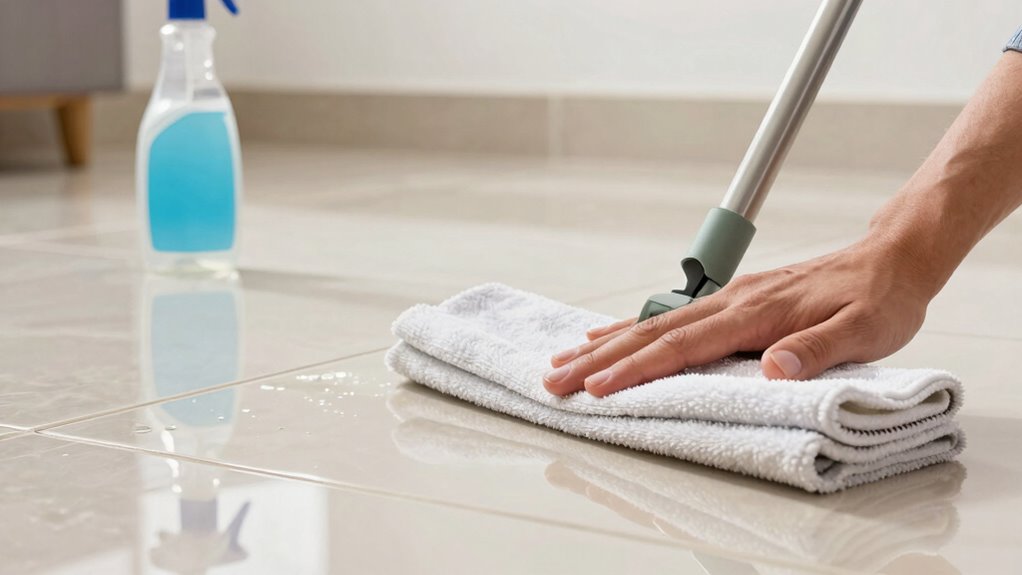
After cleaning a surface or carpet, it’s essential to take specific steps to prevent re-soiling. Once you’ve tidied up, dirt and stains can quickly settle back in if the area isn’t properly protected. One effective method is to apply stain resistant coatings. These coatings create a protective barrier that repels liquids and prevents stains from penetrating deep into fibers. By doing this, you reduce the likelihood of soils attaching to the surface again, making future cleaning easier and less frequent. Make sure to choose a coating suited for your material, and follow the manufacturer’s instructions carefully. Proper application can substantially extend the clean look of your surfaces and carpets.
In addition to coatings, consider using pet deterrent sprays if you have pets. Pets can be a major cause of re-soiling because they tend to revisit the same spots, often marking territory or tracking dirt. Pet deterrent sprays work by emitting scents that pets dislike, discouraging them from returning to the cleaned area. When used correctly, these sprays can help break the cycle of repeated soiling, especially in high-traffic or pet-friendly zones. Regularly reapply these sprays as needed, especially after cleaning, to maintain their effectiveness.
Another key step is to control foot traffic immediately after cleaning. Place barriers or use rugs to limit access to freshly cleaned areas. This prevents dirt, mud, or other debris from being tracked in and undoing your efforts. If possible, instruct household members or visitors to avoid walking on cleaned surfaces until they’re fully dry and protected. When you do walk on these areas, wear clean shoes or socks to minimize dirt transfer. Maintaining proper moisture levels is also crucial, as excess moisture can attract dirt and lead to mold or mildew, which can cause surfaces to look dirty again quickly. Proper moisture management involves not only drying but also monitoring humidity levels to prevent mold growth, which can compromise surface cleanliness. Additionally, moisture management can help prevent the growth of mold and mildew, further protecting your surfaces from re-soiling.
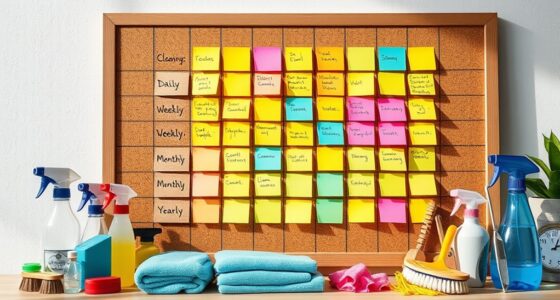
Routine maintenance also plays a vital role. Regularly vacuum carpets to remove surface soils before they settle deep, and spot clean stains promptly to prevent them from spreading or attracting more dirt. Keep pets well-groomed to reduce shedding and dirt transfer, and consider adding mats at entry points to trap dirt before it reaches your carpets or floors. These small steps collectively create an environment less prone to re-soiling.
Finally, keep an eye on moisture levels. Excess moisture can attract dirt and lead to mold or mildew, which can cause surfaces to look dirty again quickly. Use dehumidifiers or fans to dry cleaned areas thoroughly and maintain a dry environment. By combining protective coatings, pet deterrent sprays, traffic control, routine cleaning, and moisture management, you greatly reduce the chances of re-soiling and keep your space cleaner longer.
stain resistant coating for carpets
As an affiliate, we earn on qualifying purchases.
As an affiliate, we earn on qualifying purchases.
Frequently Asked Questions
What Are Common Causes of Immediate Re-Soiling?
Immediate re-soiling often happens because urine odor remains in the carpet fibers, attracting pets or children back to the spot. If cleaning isn’t thorough, residual urine can cause re-soiling. Also, using harsh cleaning agents might leave residues that attract dirt. You need to guarantee all urine odor is fully removed from the carpet fibers, and cleaning is complete, to prevent re-soiling right after you finish.
How Can Pet Behavior Affect Re-Soiling?
Like a shadow of past habits, pet behavior patterns can influence re-soiling, especially if anxiety triggers are present. When your pet feels stressed or uncertain, they might revisit the same spot, despite thorough cleaning. Addressing these triggers, such as providing a safe environment and consistent routines, helps reduce anxiety. By understanding and managing your pet’s emotional state, you can break the cycle and prevent re-soiling after cleaning.
Does Cleaning Product Choice Impact Re-Soiling?
Yes, your cleaning product choice impacts re-soiling. Opt for cleaning solutions that are effective at breaking down stains and odors, as this reduces the chances of pets returning to the same spot. Also, consider surface material considerations—use gentle, appropriate products for delicate surfaces and stronger solutions for tougher stains. This guarantees thorough cleaning, minimizes residual odors, and discourages re-soiling, helping your pet avoid the temptation to revisit the same area.
Are There Specific Areas More Prone to Re-Soiling?
You’ll find that high-traffic areas like entryways and kitchens are most prone to re-soiling, with studies showing they’re cleaned more often but also dirtier. These spots often have lower stain resistance and rough surface textures that trap grime, making re-soiling easier. To prevent this, focus on improving surface textures and using stain-resistant materials, which help keep these areas cleaner longer and reduce the chances of immediate re-soiling after cleaning.
How Long Should I Wait Before Walking on a Cleaned Surface?
You should wait at least 1 to 2 hours before walking on a cleaned surface, allowing the cleaning agents to dry completely. Incorporate a regular cleaning schedule to keep the area maintained and consider surface sealing, which creates a protective barrier against re-soiling. This helps guarantee the surface stays cleaner longer and reduces the likelihood of immediate re-soiling after cleaning. Always follow manufacturer instructions for best results.
Conclusion
To keep your space cleaner longer, remember that quick, proper cleaning techniques matter. Did you know that almost 70% of people re-soil their carpets within just a week? By addressing spills immediately, using protective treatments, and avoiding excessive moisture, you can considerably reduce re-soiling. Staying proactive not only saves you time and effort but also extends the life of your surfaces. A little extra care now ensures your home stays cleaner, fresher, and more inviting for longer periods.
Columbus Day / Indigenous Peoples' Day Picks
long weekend sales
As an affiliate, we earn on qualifying purchases.