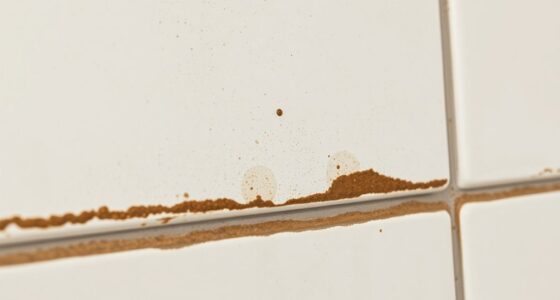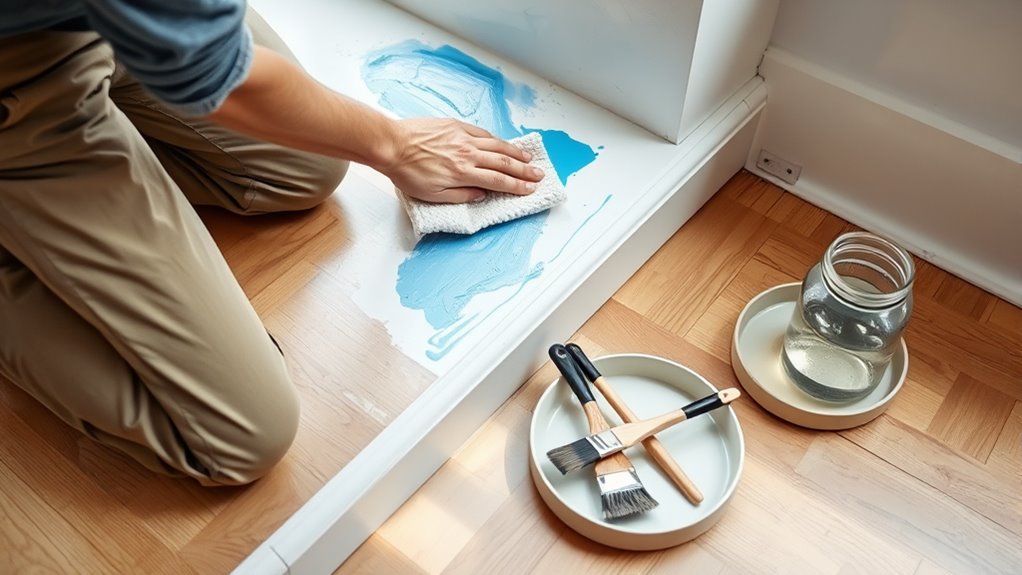

To safely remove paint spills and smudges, act quickly and use gentle techniques. Wear protective gloves and goggles, keep the area well-ventilated, and carefully dab or scrape excess paint with a plastic scraper or soft cloth. For water-based paint, warm soapy water works well; for dried or oil-based paint, try rubbing alcohol or a commercial remover, testing on small areas first. For more tips on effective cleanup, keep exploring these helpful steps.
Key Takeaways
- Use gentle, light strokes with a damp cloth or brush to lift fresh paint spills without spreading them.
- Wear protective gloves, goggles, and ensure good ventilation to stay safe during cleanup.
- For water-based paints, clean with warm water and mild soap; for dried paints, use appropriate solvents cautiously.
- Avoid aggressive scrubbing; instead, gently blot or scrape with plastic tools to prevent surface damage.
- Seek professional help for stubborn or extensive paint stains, especially on delicate surfaces or fabrics.
Accidents happen, and paint spills or smudges can quickly turn into frustrating messes. When you’re faced with unwanted paint on your floors, furniture, or walls, it’s essential to approach cleanup carefully to avoid making the situation worse. Your first step is to use proper brush techniques if you’re working with brushes near the spill. Light, gentle strokes help lift excess paint without spreading it further. For larger spills, don’t scrub aggressively, as this can embed the paint deeper into surfaces or damage delicate materials. Instead, gently blot or scrape away excess paint with a putty knife or a plastic scraper, being cautious not to scratch surfaces.
While handling these spills, always wear protective gear. Gloves protect your skin from potentially harmful chemicals in certain paints, especially oil-based or specialty formulations. Safety goggles are also a good idea to prevent splashes from reaching your eyes, particularly if you’re working with aerosols or spray paints. If you’re cleaning a spill on a carpet or fabric, consider wearing a mask to avoid inhaling fumes, and keep the area well-ventilated. Protective gear isn’t just about safety; it also helps you stay focused and avoid accidental contact with paint, which can stain or irritate skin.
Always wear protective gear like gloves and goggles when cleaning paint spills.
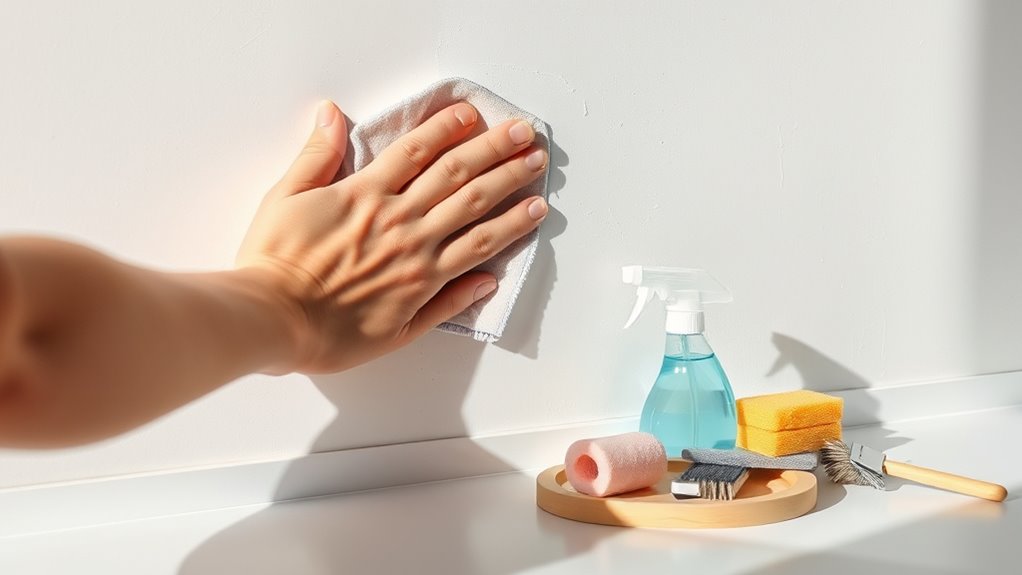
Once you’ve addressed the initial excess, it’s time to choose the right cleaning agents based on the type of paint. Water-based paints are generally easier to clean up. For fresh spills, dampen a cloth with warm water and mild soap, then gently wipe the area. For dried paint, you might need a solvent like rubbing alcohol or a commercial paint remover, but always test a small area first to prevent damage. When using chemicals, wear your gloves and goggles, and follow the manufacturer’s instructions carefully. Remember, patience is key—forcing or scrubbing too hard can cause paint to smear or embed further into the surface, complicating cleanup.
Additionally, consulting with professional cleaners or mechanic shops for stubborn or extensive paint spills can help ensure safe and effective removal, especially when dealing with delicate surfaces. Throughout the process, keep your workspace organized and protected. Use drop cloths or old newspapers to catch drips and splatters. After cleaning, thoroughly wash your hands and any protective gear used. Proper disposal of paint remnants and cleaning materials is also vital—never pour leftover paint or solvents down the drain. With the right techniques, protective gear, and a calm approach, you can effectively remove paint spills and smudges, restoring your space without unnecessary stress or damage.
Frequently Asked Questions
Can I Use Household Cleaning Products to Remove Fresh Paint?
You can often use household cleaning products to remove fresh paint, but be cautious. For quick removal, try a mild soap and water first. If that doesn’t work, consider a paint remover or solvent alternatives like rubbing alcohol or vinegar. Always test a small area first to avoid damage. Keep in mind, fresh paint is easier to clean with gentle products, but for tougher stains, specialized solvents may be necessary.
How Do I Prevent Paint Smudges on Delicate Surfaces?
A stitch in time saves nine, they say. To prevent paint smudges on delicate surfaces, you should prioritize delicate surface protection and employ smudge prevention techniques. Use painter’s tape to shield edges and fragile items, and work slowly to avoid accidental smudges. Keep tools and hands steady, and test small areas first. These precautions help safeguard surfaces, ensuring your project stays neat without risking damage.
What Safety Precautions Should I Take When Cleaning Paint Spills?
When cleaning paint spills, you should always wear protective gear like gloves and masks to avoid skin and inhalation hazards. Guarantee good ventilation safety by opening windows or using fans to disperse fumes. Avoid mixing cleaning chemicals, and follow manufacturer instructions carefully. Keep children and pets away from the area, and work in a well-ventilated space to prevent respiratory issues. Taking these precautions keeps you safe during cleanup.
Are There Eco-Friendly Options for Cleaning Dried Paint?
Think of eco-friendly cleaning options as gentle rain washing away stubborn paint. You can use biodegradable solvents, which break down naturally without harming the environment, or turn to natural cleaning agents like vinegar or baking soda. These eco-friendly choices act like a soothing breeze, safely dissolving dried paint without toxic fumes. By choosing these greener alternatives, you protect your home and planet, making cleanup both effective and earth-friendly.
How Long Should I Wait Before Cleaning After Painting?
You should wait for the paint to dry completely before cleaning. Typically, drying time varies—latex paint usually takes 1-2 hours, while oil-based paint can take 6-8 hours or longer. To avoid smudging or damaging your work, use touch-up tips like gentle cleaning and avoiding scrubbing too soon. Always check the manufacturer’s instructions for specific drying times, and wait until the paint feels dry to the touch before cleaning.
Conclusion
Think of your walls as a canvas waiting to be renewed. With the right tools and gentle techniques, you can wipe away paint spills and smudges without leaving a mark. Remember, patience is your best brush stroke—rushing can cause more damage. By approaching cleanup carefully, you’ll restore your space’s beauty effortlessly. Just like a skilled artist, you have the power to turn a messy accident back into a pristine masterpiece.