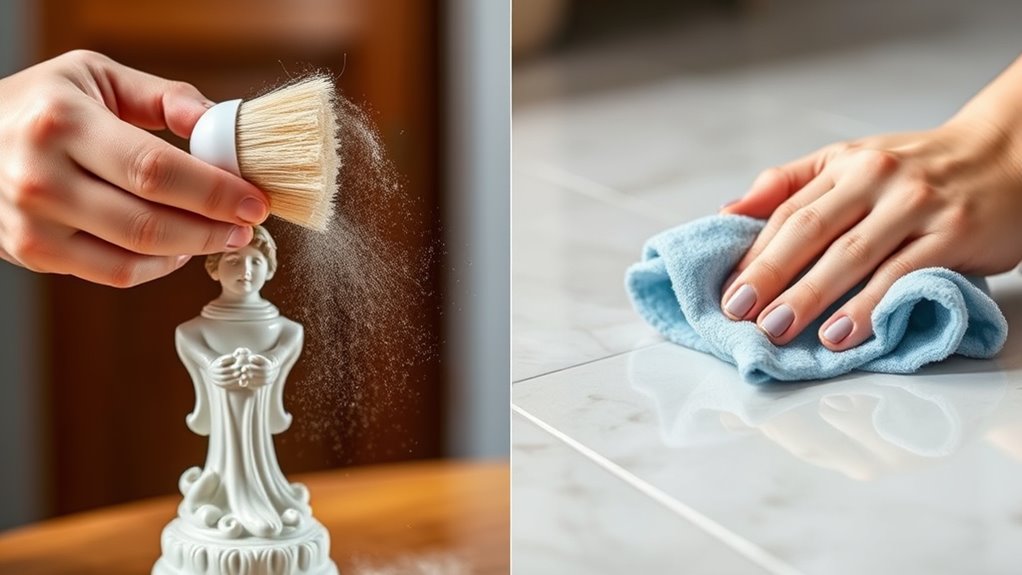
Use dry dusting for delicate surfaces like electronics, painted finishes, or to quickly remove light dust without water damage. Damp wiping works better for stubborn grime, greasy stains, or high-touch areas like kitchens and bathrooms. It dissolves dirt more effectively but isn’t suitable for water-sensitive materials like wood or fabric. Knowing which method to choose will help you clean safely and efficiently—if you want to learn more, there’s important detail to take into account.
Key Takeaways
- Use dry dusting for light dust removal on delicate surfaces like electronics and painted finishes.
- Opt for damp wiping when cleaning stubborn stains, grease, or sticky residues, especially on durable surfaces.
- Choose dry dusting to minimize water damage risk and preserve sensitive materials such as wood or fabric.
- Apply damp wiping in areas with heavy grime, such as kitchens and bathrooms, where moisture can effectively dissolve dirt.
- Consider surface material and dirt type to determine the safest and most effective cleaning method.
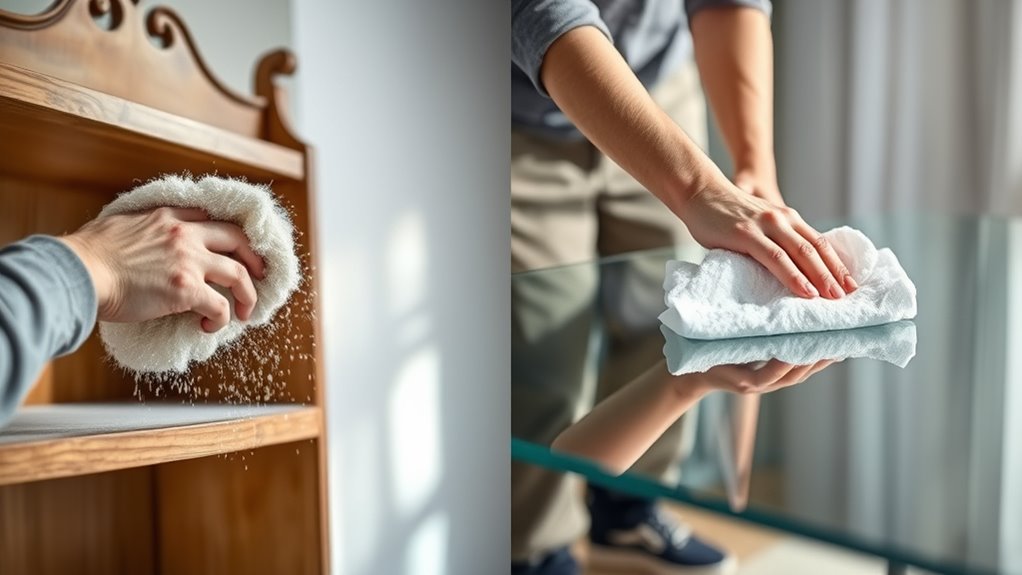
When it comes to cleaning surfaces, choosing between dry dusting and damp wiping can considerably impact effectiveness and surface safety. Your decision influences cleaning efficiency and how well the cleaning method suits the material you’re working with. Dry dusting involves using a cloth, duster, or microfiber to remove dust, dirt, and loose debris from surfaces. It’s quick, easy, and generally safe for most surfaces, especially delicate ones like electronics or painted finishes. Since it doesn’t introduce moisture, it reduces the risk of water damage or streaks, making it a highly efficient way to handle light dust accumulation. However, dry dusting might not be enough for sticky residues, stains, or bacteria, which require a more thorough approach.
Damp wiping, on the other hand, involves using a slightly moist cloth or mop to clean surfaces. It’s particularly effective for removing grime, smudges, and sticky residues that dry dusting can’t handle. Damp wiping enhances cleaning efficiency by physically lifting dirt and dissolving grease or stains, making it suitable for kitchens, bathrooms, and high-touch areas. But you need to weigh surface compatibility; not all surfaces tolerate moisture equally. For instance, wooden furniture with a delicate finish might be damaged or warped if exposed to water for too long. Similarly, electronics or painted surfaces could suffer from water streaks or damage if not wiped properly. Thus knowing the material you’re cleaning helps you decide whether damp wiping is appropriate or if dry dusting will suffice. Additionally, understanding the type of surface material, such as wood, stone, or linen, can help you choose the safest cleaning method to preserve its appearance and integrity.
Frequently Asked Questions
Can Dry Dusting Damage Delicate Surfaces?
Dry dusting can potentially damage delicate surfaces if you’re not careful, as it might scratch or dislodge fragile finishes. To guarantee proper dust particle removal and surface protection, use a soft, microfiber cloth and gentle strokes. Avoid excessive pressure, especially on sensitive items like antiques or painted surfaces. This approach helps prevent scratches while effectively cleaning, maintaining the integrity of delicate surfaces and keeping them looking their best.
Is Damp Wiping Suitable for Electronics?
Think of electronics as fragile glass sculptures; damp wiping is like using a gentle, slightly moist cloth, which can be safe if done carefully. For electronics safety, avoid excessive moisture that can seep into crevices, causing damage or surface residue. Always use a lightly dampened cloth, never soaked, and avoid harsh chemicals. This way, you protect your devices while effectively cleaning, just like preserving delicate art with care.
How Often Should Each Method Be Used?
You should dry dust regularly, ideally once a week, to prevent dust accumulation and maintain cleanliness. Damp wipe less often, about once a month or when surfaces are visibly dirty, to avoid moisture buildup. Adjust cleaning frequency based on your environment; high-traffic or dusty areas need more frequent attention. Balancing dry dusting and damp wiping guarantees surfaces stay clean without overdoing either method.
Are There Cleaning Products That Work Best With Each Method?
Surprisingly, some might think high-tech commercial cleaning products are needed, but eco-friendly solutions shine here. For dry dusting, use soft microfiber cloths or dusters, avoiding harsh chemicals. Damp wiping benefits from gentle, biodegradable cleaners that cut grime without residue. You can find eco-friendly solutions that work with both methods, ensuring effective cleaning while protecting the environment. So, skip the heavy-duty chemicals and go green for a cleaner, healthier space.
Can Both Methods Be Combined for Optimal Cleaning?
You can definitely combine cleaning techniques to maximize dust removal. Start with dry dusting to loosen and lift surface dust, then follow up with damp wiping to remove stubborn grime and residue. This approach guarantees thorough cleaning, especially on delicate surfaces or areas with heavy dust buildup. By combining these methods, you optimize your cleaning process, making it more effective and efficient while preventing dust from settling back quickly.
Conclusion
Choosing between dry dusting and damp wiping depends on your surface and dirt type. Dry dusting works best for delicate items and loose dust, while damp wiping effectively removes grime and stains. Did you know that regular dusting can reduce allergens by up to 60%? By understanding when to use each method, you’ll keep your space cleaner and healthier. So, assess your surface, pick the right technique, and enjoy a spotless, dust-free environment.