Cross-contamination starts with cloth handling because improper use and cleaning of cloths can transfer bacteria, allergens, and pathogens between surfaces and ingredients. If you don’t switch or wash cloths regularly, contaminated cloths can spread harmful germs, increasing the risk of foodborne illnesses. Using the same cloth on different tasks or surfaces without proper sanitation makes it easy for bacteria to travel. Stay aware—continuing this guide will show you how proper cloth handling can protect your environment and food safety.

Get cleaning gear delivered free with Prime
- Fast, free delivery on millions of items
- Prime Video, Amazon Music and more included
- Member-only deals all year
Key Takeaways
- Improper cloth handling transfers bacteria from contaminated surfaces to food and utensils.
- Using the same cloth for different tasks spreads pathogens across surfaces.
- Dirty or saturated cloths harbor harmful microorganisms, increasing contamination risk.
- Lack of proper storage allows bacteria to grow on clean cloths before reuse.
- Inadequate laundering fails to eliminate bacteria, making cloths vectors for cross-contamination.
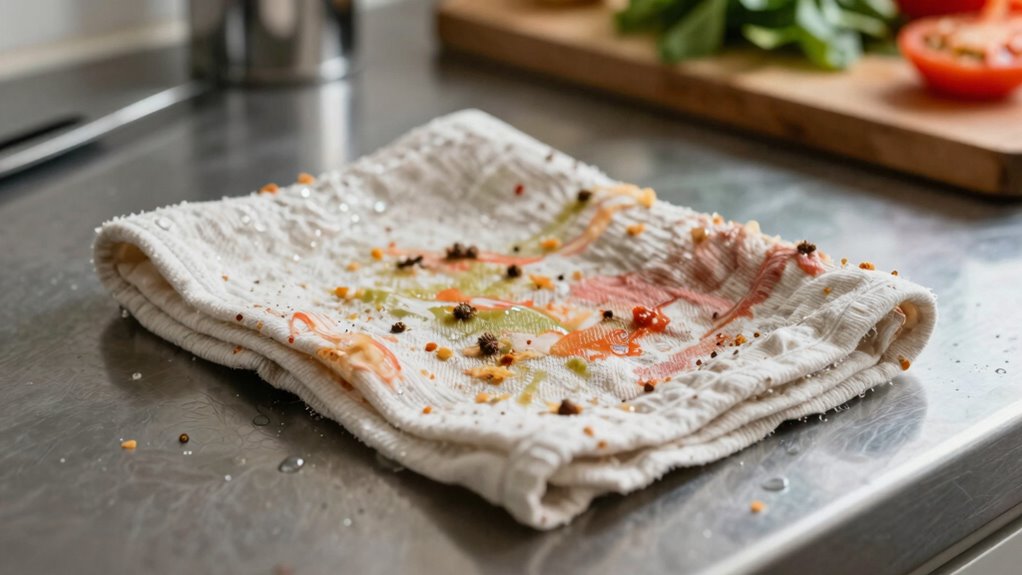
Cross-contamination can occur quickly if cloth handling isn’t done carefully, posing a serious risk to food safety and hygiene. When you handle cloths improperly, you risk transferring bacteria, allergens, and other contaminants from one surface or ingredient to another. That’s why strict adherence to cleaning protocols is essential. Proper cleaning protocols ensure that cloths are sanitized regularly, reducing the chance of cross-contamination. Neglecting these protocols can lead to cloths becoming vectors for harmful pathogens, which can then spread throughout your workspace and onto food. Using contaminated cloths to wipe counters, utensils, or raw ingredients increases the likelihood that bacteria transfer to foods that are meant to be safe, cooked or served raw. Regularly monitoring hygiene practices helps prevent the spread of contaminants and maintains a safe environment. Equipment sanitation plays a fundamental role in preventing cross-contamination, especially when it comes to cloth handling. If you don’t regularly sanitize equipment and tools, bacteria can hide in crevices or on the surface, waiting to spread. When you use unclean cloths on equipment without proper sanitation, you’re just moving contaminants from one surface to another. That’s why establishing routine cleaning protocols for equipment is essential. You need to guarantee that all surfaces, including cutting boards, knives, and worktables, are thoroughly cleaned and sanitized before and after use. This reduces the risk of bacteria transferring via cloths, especially when switching between raw meats and ready-to-eat foods. Another key point is training yourself and your staff on proper cloth handling techniques. Always use different cloths for different tasks—one for cleaning surfaces, another for wiping hands, and so on. Never reuse a cloth that’s visibly dirty or saturated with food residue without washing it first. When you do laundry, follow proper procedures to guarantee cloths are thoroughly sanitized. This means washing at high temperatures and using appropriate disinfectants. Proper storage of clean cloths in a dry, sanitary environment also prevents the growth of bacteria before they’re used again. Paying attention to proper laundering practices ensures that cloths are free of harmful microorganisms. Additionally, staying informed about bacteria and pathogen risks helps reinforce the importance of rigorous hygiene standards. Implementing effective cleaning routines can significantly decrease the potential for cross-contamination and improve overall food safety.
Frequently Asked Questions
How Often Should Cloths Be Replaced to Prevent Cross-Contamination?
You should replace cloths regularly, ideally after each use or when they show signs of wear. Cloth durability and material absorption decrease over time, making them less effective and more prone to harboring bacteria. Using worn-out or overly absorbent cloths increases cross-contamination risk. So, to maintain cleanliness and safety, change cloths frequently, especially when they become visibly dirty, frayed, or lose their absorbent qualities.
Are Certain Types of Cloths More Prone to Harboring Bacteria?
Certain cloths are more prone to harboring bacteria due to their fabric fibers and material durability. Synthetic fabrics, like polyester, tend to trap bacteria more than natural fibers such as cotton, which are easier to wash thoroughly. Cloths with a loose weave or low durability may also retain germs longer, making them riskier for cross-contamination. You should choose cloths with tightly woven, durable fibers to reduce bacteria buildup effectively.
Can Using the Same Cloth for Multiple Tasks Spread Germs?
Using the same cloth for multiple tasks is like passing a baton in a relay race—germs transfer quickly from one surface to another, spreading contamination. Each time you wipe, bacteria cling to the fabric, turning it into a germ transfer hotspot. Cloth contamination then spreads easily, making it a breeding ground for bacteria. To prevent this, always switch cloths between tasks and wash them thoroughly, stopping germs in their tracks.
What Are the Best Storage Methods for Clean Cloths?
You should store clean cloths in airtight containers or use color-coded storage systems to prevent cross-contamination. Airtight containers keep cloths dry and protected from dust and bacteria, while color coding helps you quickly identify and assign cloths for specific tasks. Always guarantee cloths are completely dry before storing, and keep storage areas clean. This approach minimizes germs spreading and maintains hygiene across different cleaning routines.
How Does Wash Cycle Temperature Affect Bacteria Removal From Cloths?
Think of wash cycle temperature like a fierce fire that destroys bacteria. Higher temperatures, typically 140°F or above, boost detergent effectiveness and guarantee bacteria are thoroughly killed. The rinse cycle is essential, washing away loosened germs and detergent residues. Lower temperatures may not fully eliminate bacteria, risking cross-contamination. So, always opt for the hot cycle when cleaning cloths to keep germs at bay and maintain a hygienic environment.
Conclusion
Remember, every cloth you handle is like opening a tiny door to bacteria. By being mindful and practicing proper cleaning habits, you become the gatekeeper of your family’s health. Don’t let cross-contamination be the silent thief of safety in your home. Treat your cloths with respect—they’re the frontline soldiers in your fight against germs. When you handle them carefully, you’re weaving a shield of protection that keeps your loved ones safe and healthy.
Halloween Picks
halloween
As an affiliate, we earn on qualifying purchases.