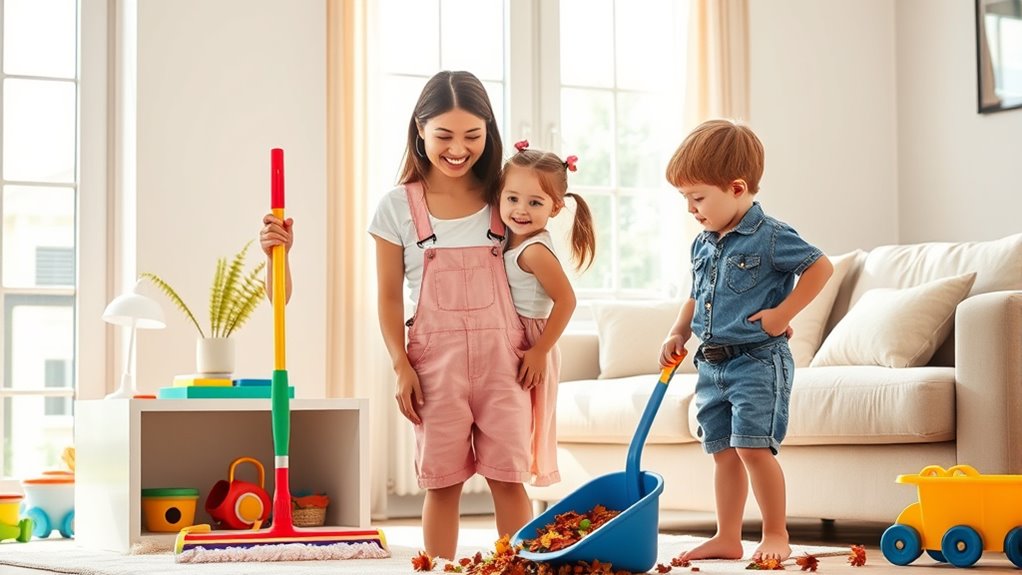

To involve your kids in keeping the house tidy, assign age-appropriate chores that match their abilities and make cleaning fun with games, music, or rewards. Explain why chores matter and establish regular routines to build responsibility. Use kid-friendly tools to boost confidence, praise their efforts, and celebrate small successes. Stay patient and flexible as they learn, fostering teamwork and independence. Keep these tips in mind, and you’ll find there are more effective ways to share the chores happily.
Key Takeaways
- Assign age-appropriate chores using child-friendly tools to encourage participation and build confidence.
- Establish a consistent routine and explain the importance of cleaning to foster responsibility.
- Turn chores into fun activities or challenges, like timed tasks or music, to boost motivation.
- Celebrate small successes and use positive reinforcement to develop a positive attitude toward cleaning.
- Be patient and flexible, emphasizing effort over perfection to help children develop good habits gradually.
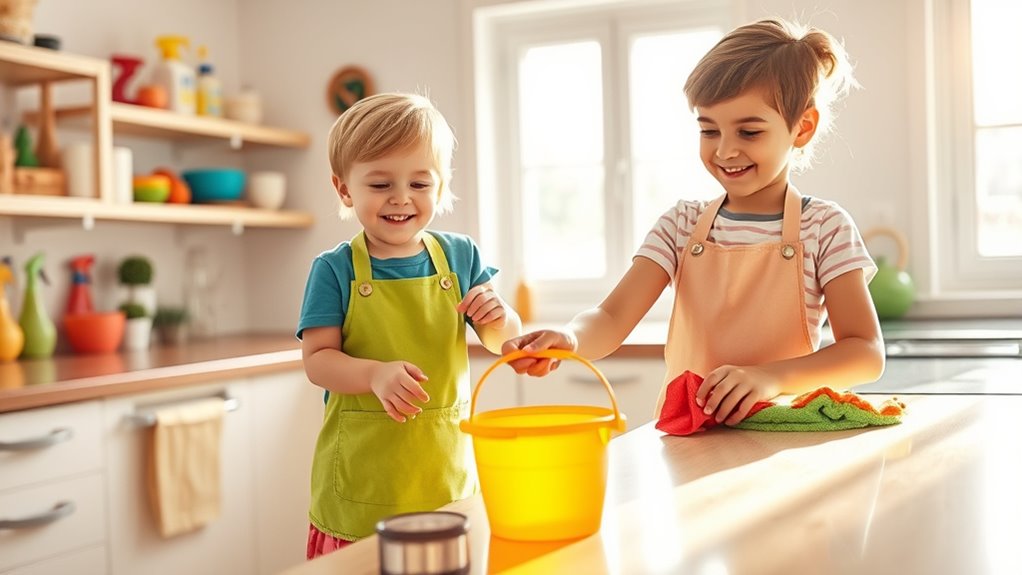
Have you ever wondered how to turn cleaning into a fun and productive activity with your kids? The key is to start by assigning age-appropriate chores that match their abilities. When children feel capable and trusted, they’re more likely to participate willingly. For younger kids, simple tasks like putting away toys, wiping down surfaces, or dusting low areas can be perfect. As they grow, you can gradually introduce more complex responsibilities, like vacuuming or organizing their clothes. This approach not only makes cleaning manageable but also helps your children develop a sense of achievement. Incorporating child-friendly cleaning tools can make tasks easier and more enjoyable for little helpers. Teaching responsibility is an essential part of involving kids in house chores. When you clearly explain why cleaning matters, you help them understand their role in maintaining a happy home. Make it a routine, so they see chores as normal parts of daily life, not just chores to get done. Use positive reinforcement, praise, or small rewards to celebrate their efforts. This encourages a positive attitude toward household tasks and builds their confidence. When children learn to take responsibility for their space, they also learn important life skills like organization, time management, and accountability.
To make chores more engaging, turn cleaning into a game or challenge. For example, set a timer and see how much they can accomplish before it goes off, or create a friendly competition between siblings. Playing music while cleaning can also boost motivation and make the activity feel less like a chore. Be sure to provide the right tools for their size, such as a small broom or a kid-friendly spray bottle. When kids have the right tools, they’ll feel more independent and competent, which reinforces their sense of responsibility.
Consistency is key. Set a regular schedule for chores, whether it’s daily, weekly, or after specific activities. When children know what to expect, they’re more likely to develop good habits. Remember to be patient and flexible—kids are still learning, and it’s okay if their work isn’t perfect. The goal is to teach them that everyone has a part in keeping the home tidy, and that their contributions matter. Keep the focus on effort and participation rather than perfection, and you’ll foster a positive, teamwork-oriented attitude about cleaning. Over time, these habits will become second nature, and your kids will see chores not as a burden but as a way to contribute and learn responsibility.
Frequently Asked Questions
How Can I Motivate Reluctant Children to Help With Chores?
To motivate reluctant children to help with chores, try implementing reward systems and chore charts. These tools make chores feel like a game, encouraging participation. Praise their efforts and offer small rewards for completed tasks. You’ll find that consistency and positive reinforcement boost their willingness to help, turning chores into a fun and rewarding activity rather than a chore they want to avoid.
What Are Age-Appropriate Cleaning Tasks for Preschoolers?
You’re wondering about age-appropriate chores for preschoolers. At this age, preschool responsibilities include simple tasks like putting away toys, wiping down surfaces with a damp cloth, helping to set the table, and watering plants. These chores build independence and responsibility. Keep tasks fun and manageable, and praise their efforts. By involving your preschooler in age-appropriate chores, you teach valuable skills while fostering a sense of accomplishment.
How Do I Handle Disagreements Between Siblings During Cleaning?
When siblings clash during cleaning, focus on conflict resolution by calmly addressing each child’s feelings and encouraging them to share their perspectives. Promote sibling cooperation by reminding them that teamwork makes the task easier and more fun. Set clear rules for respectful behavior and praise their efforts to work together. By fostering open communication and emphasizing collaboration, you help them learn valuable skills while maintaining harmony during cleaning.
What Safety Precautions Should I Take When Children Clean?
When kids help clean, you should prioritize safety by childproofing hazards like sharp objects or heavy items. Always use cleaning product safety by choosing child-friendly, non-toxic cleaners and keeping them away from reach. Supervise closely, and teach children proper handling of cleaning tools. This ensures they stay safe, avoid accidents, and learn good habits while contributing to household chores.
How Can I Make Cleaning Time Fun for Kids?
Imagine cleaning as a treasure hunt, where each task uncovers shiny rewards. To make cleaning time fun, turn chores into games with creative rewards, like stickers or extra playtime. Establish cleaning routines with lively music or timed challenges to keep kids engaged. When you make it playful, your little crew will look forward to tidying up, transforming chores from drudgery into an adventure they’ll want to repeat.
Conclusion
Involving kids in cleaning not only teaches responsibility but also builds lifelong habits. Some believe that children naturally avoid chores, but research shows that with the right approach, they actually enjoy feeling helpful. When you make cleaning fun and rewarding, you foster a positive attitude toward household tasks. So, go ahead—trust the theory that kids can learn to love tidying up. With patience and encouragement, you’ll turn cleaning into a family activity everyone looks forward to.