Choosing the right air cleanup terms depends on your needs. HEPA filters are essential if you want to trap tiny particles like pollen and dust, improving allergy symptoms. Carbon filters target odors and gases for a fresher space. UV sterilization helps reduce bacteria and viruses, while ionization assists in removing airborne allergens. Understanding these terms can guide you to the best solution for your environment—continue to explore to get the full picture.
Key Takeaways
- HEPA filters are essential for removing small particles like allergens and dust, making them crucial for air filtration efficiency.
- Carbon filters effectively eliminate odors and gases, complementing particle removal for comprehensive air cleaning.
- UV sterilization reduces microbial contamination, enhancing indoor air quality by killing bacteria and viruses.
- Ionization can improve air clarity by charging particles for easier removal but may produce ozone, which requires caution.
- Understanding the specific functions and limitations of each technology helps select the most effective air purification system.
Have you ever wondered what terms are commonly used when discussing air cleanup? If you’re trying to improve your indoor air quality, understanding key concepts like air filtration efficiency can make a big difference. Air filtration efficiency measures how well an air purifier or filtration system removes particles from the air. Higher efficiency means fewer pollutants, dust, and allergens circulate in your space, leading to cleaner, healthier indoor air. When choosing an air cleaning device, knowing its filtration efficiency helps you assess how effective it will be at improving indoor air quality and reducing potential health risks.
Understanding air filtration efficiency helps you choose effective devices for cleaner, healthier indoor air.
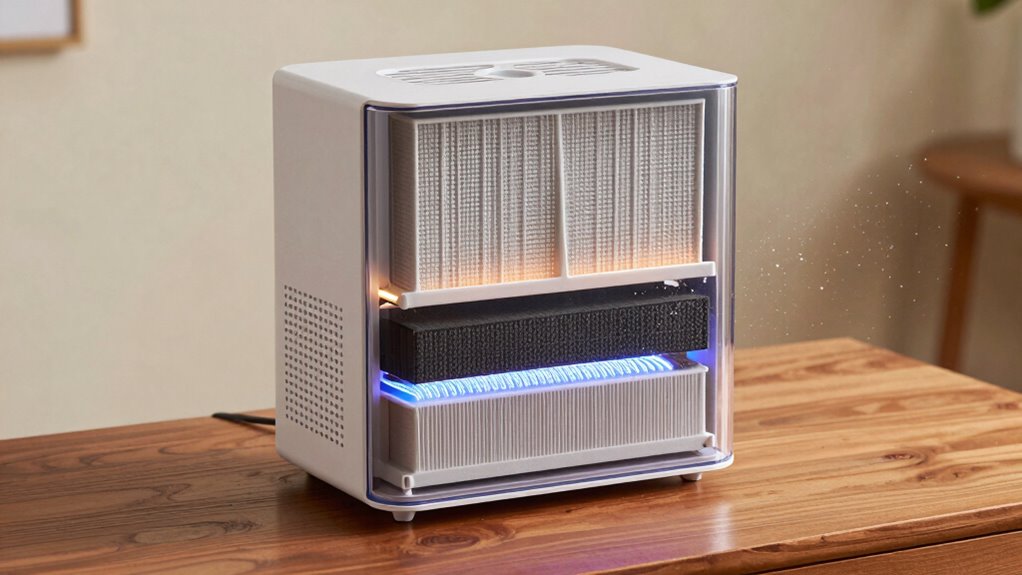
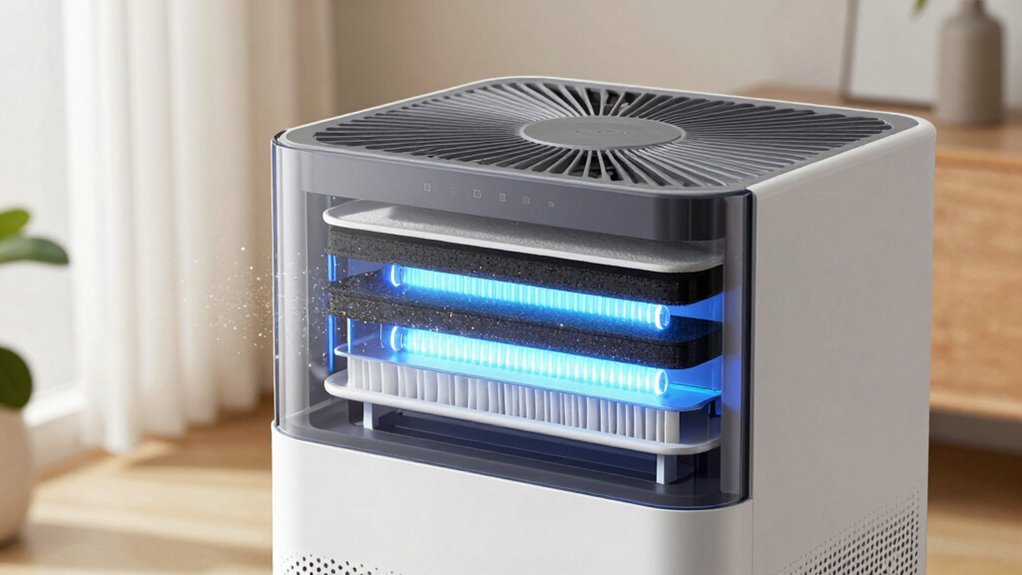
Among the most essential terms you’ll encounter are HEPA filters, carbon filters, UV sterilization, and ionization. HEPA, or High-Efficiency Particulate Air filters, are renowned for their ability to trap tiny particles—up to 99.97% of particles as small as 0.3 microns. This makes them especially useful for allergy sufferers or anyone concerned about airborne pollutants. Their high air filtration efficiency directly contributes to better indoor air quality, making sure dust, pollen, mold spores, and pet dander are considerably reduced. When you see a purifier with a HEPA filter, you can trust it’s working hard to clear the air of the smallest threats.
Carbon filters are another vital term. These filters use activated charcoal to absorb odors, gases, and volatile organic compounds (VOCs). Unlike HEPA filters, which target particles, carbon filters focus on gaseous pollutants that can linger in enclosed spaces. If you’re aiming for a fresher, odor-free environment, especially in kitchens or smokers’ areas, carbon filtering plays a pivotal role in enhancing indoor air quality. Combining carbon filters with HEPA filtration can give you a thorough approach to air cleanup, tackling both particles and odors effectively. Additionally, the adsorption process in carbon filters can be impacted by the filter media used, which is important to consider for optimal performance. Understanding the adsorption capacity of these filters can help you choose one that maintains effectiveness over time.
UV sterilization involves using ultraviolet light to kill bacteria, viruses, and mold spores. When air passes through a UV chamber, these microorganisms are destroyed or rendered harmless. This process doesn’t remove particles but greatly reduces microbial contamination, which can contribute to better indoor air quality and overall health. Some UV systems incorporate air purification features that enhance microbial control. Ionization, on the other hand, charges airborne particles so they stick to surfaces or get captured by filters more easily. Ionizers can help reduce airborne allergens and improve clarity in the air, though they may produce ozone as a byproduct—something to consider depending on your sensitivities. Additionally, understanding the effectiveness of air filtration efficiency can help you choose the right device for your specific needs. Knowing how these technologies work together can optimize your overall approach to indoor air quality management.

LEVOIT Air Purifier for Home Allergies and Pets Hair Smokers in Bedroom, H13 True HEPA Filter, 24db Filtration System Cleaner Odor Eliminators, Remove 99.97% Dust Smoke Mold Pollen, Core 300, White
- AHAM Verified for Performance: Independently tested for air quality and efficiency
- Powerful 56W Motor: Delivers fast, effective cleaning with 143 CFM CADR
- 3-in-1 Filter System: Removes dust, smoke, and odors effectively
As an affiliate, we earn on qualifying purchases.
As an affiliate, we earn on qualifying purchases.
Frequently Asked Questions
How Do HEPA Filters Compare to Other Air Purification Methods?
HEPA filters are highly effective at capturing tiny particles, thanks to their high HEPA efficiency, often removing 99.97% of airborne pollutants. Compared to other methods, they excel at filtering allergens and microbes. However, their filter lifespan is critical; over time, efficiency can decline. You’ll want to regularly replace or clean the filters to maintain peak air purification. Overall, HEPA filters are a reliable choice for clean indoor air.
Can UV Air Purifiers Eliminate All Airborne Pathogens?
Ever wondered if UV air purifiers can eliminate all airborne pathogens? While UV efficacy is high against many microbes, some pathogens have shown resistance, making it unlikely that UV alone can remove every airborne threat. UV air purifiers greatly reduce bacteria and viruses, but they aren’t foolproof. For thorough protection, combining UV with other purification methods is your best bet to tackle pathogen resistance effectively.
Are Ionization Devices Safe for People With Respiratory Issues?
Ionization devices can pose risks for people with respiratory issues, so you should approach their use cautiously. They may produce ozone, which can worsen respiratory safety and allergy management. If you have asthma or allergies, it’s better to select air purifiers that don’t generate ozone or irritants. Always check product details and consult with a healthcare professional to ensure safe indoor air quality tailored to your respiratory needs.
How Often Should Carbon Filters Be Replaced for Optimal Performance?
You should replace your carbon filters every 3 to 6 months to guarantee peak performance. The coincidence here is that, just as seasons change, filter lifespan varies based on usage and air quality. Regularly checking replacement intervals helps prevent odors and pollutants from slipping through. If you notice a decline in air freshness or increased smells, it’s time to swap out the filter, keeping your indoor air clean and healthy.
Do Combined Air Cleaning Technologies Provide Better Protection?
You’ll find that combined air cleaning technologies often provide better protection because they target different pollutants simultaneously. While some air quality myths suggest single solutions are enough, using multiple methods enhances overall air quality. Although the cost comparison might seem higher initially, investing in a multi-tech system can save money long-term by reducing health issues and maintenance needs. Ultimately, combining technologies offers a more all-encompassing, effective approach to cleaner indoor air.
Conclusion
Understanding air cleanup terms like HEPA, carbon, UV, and ionization helps you choose the right filtration for your space. Did you know that HEPA filters can remove 99.97% of particles as small as 0.3 microns? That’s like filtering out almost all allergens and pollutants in your home. By knowing what each method does, you can make smarter decisions to breathe cleaner, healthier air every day. Stay informed and prioritize your indoor air quality!