SOPs in cleaning businesses often fail because they become outdated, and staff stop following them consistently. Poor accountability and neglected equipment maintenance also cause issues, leading to inconsistent results and safety risks. To fix these problems, you need to regularly review and update your SOPs, enforce accountability, and incorporate routine equipment maintenance. Staying proactive guarantees your procedures remain effective and staff stay committed. Keep going to discover the best strategies to keep your SOPs working for you.
Key Takeaways
- SOPs become outdated or neglected, causing confusion and inconsistent service quality.
- Lack of employee accountability leads to poor adherence and step-skipping.
- Insufficient training and reinforcement discourage proper SOP implementation.
- Failure to regularly review and update SOPs results in irrelevant procedures.
- Poor equipment maintenance undermines SOP effectiveness and operational efficiency.
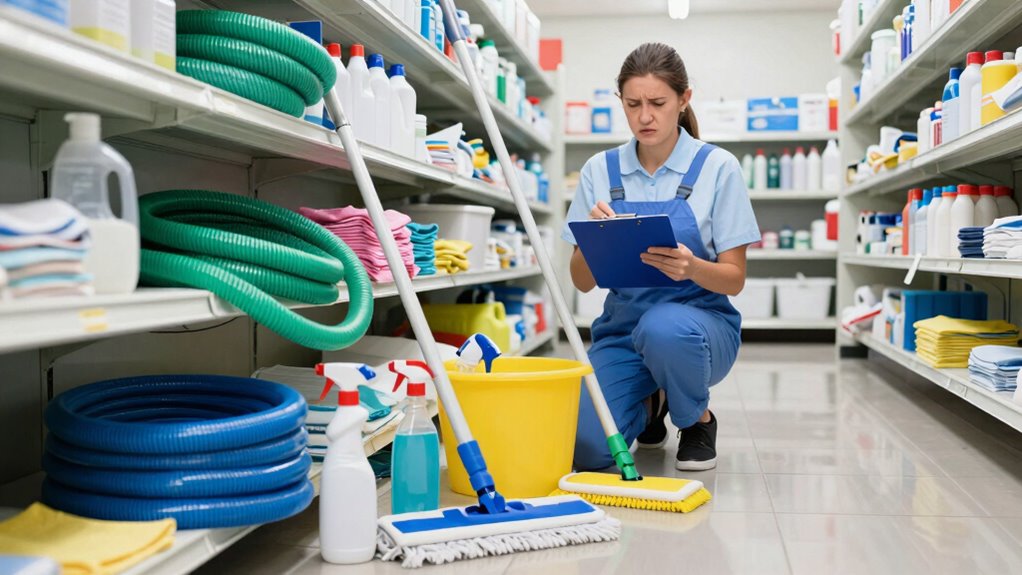
Standard Operating Procedures (SOPs) are essential for running a successful cleaning business because they provide clear, consistent guidelines for every task. However, even the best-written SOPs can fail if they aren’t properly implemented or maintained. One common reason they fall short is a lack of emphasis on employee accountability. If your team doesn’t understand that following SOPs is part of their responsibilities, they might cut corners or skip steps, risking poor service quality and safety issues. To fix this, you need to establish a culture where accountability is clear. Regular training sessions, performance reviews, and positive reinforcement help reinforce that following procedures isn’t optional but a core part of their job. When employees know their adherence to SOPs is monitored and valued, they’re more likely to follow them diligently. Additionally, fostering a culture of accountability encourages ongoing commitment to standards and continuous improvement.
Another major factor that causes SOPs to fail is neglecting equipment maintenance. If your cleaning tools and machinery aren’t properly maintained, they won’t perform as expected, which can lead to inconsistent results and damage to property or equipment. This can also demotivate your staff, who may find it frustrating to work with malfunctioning tools. To prevent this, you need a systematic approach to equipment maintenance. Schedule regular checks and maintenance routines, and assign someone responsible for keeping records. When your team has the right, well-maintained tools, they’re more likely to follow SOPs correctly because they trust the equipment to do its job. Including preventive maintenance in your SOPs emphasizes the importance of proactive care for equipment, which can help avoid costly breakdowns. Incorporating regular equipment inspections and checks into your SOPs further reinforces the importance of equipment care and helps catch issues early before they escalate. Ensuring that SOPs incorporate equipment maintenance schedules helps maintain consistent performance and safety standards. Moreover, emphasizing the importance of routine checks can foster a proactive mindset among staff, leading to fewer disruptions and more reliable service.
A common mistake in cleaning businesses is assuming that SOPs are a one-and-done document. In reality, they need to be living documents that evolve with your business. Failing to review and update SOPs regularly can lead to outdated practices, confusion, and inconsistent service delivery. Make it a habit to revisit your SOPs periodically, gather feedback from your staff, and adjust procedures as needed. This not only keeps your operations running smoothly but also shows your team that their input matters. When SOPs are kept current and relevant, employee accountability naturally improves because everyone understands their role in upholding standards.

Ultimate Hotel Hygiene Guide: A Comprehensive Manual for Professional Hospitality and Cleaning Standards
As an affiliate, we earn on qualifying purchases.
As an affiliate, we earn on qualifying purchases.
Frequently Asked Questions
How Do I Create Effective SOPS for Different Cleaning Tasks?
To create effective SOPs for different cleaning tasks, start by outlining clear cleaning protocols tailored to each task. Use simple, specific language to guarantee consistency, and include steps for quality assurance to maintain high standards. Regularly review and update your SOPs based on staff feedback and changing needs. Training your team thoroughly on these protocols helps ensure consistency, accountability, and improved cleaning results across all tasks.
What Tools Can Help Streamline SOP Implementation?
Imagine you’re effortlessly managing multiple cleaning crews, and your SOPs are always followed. Automation tools and compliance software are your best allies, streamlining SOP implementation. These tools automate task scheduling, track compliance, and send reminders, ensuring everyone stays on the same page. By integrating automation tools, you reduce errors and save time, making SOP adherence seamless and consistent across your cleaning business, boosting efficiency and quality effortlessly.
How Often Should Cleaning SOPS Be Reviewed and Updated?
You should review and update your cleaning SOPs at least every six months to maintain staff accountability and guarantee quality assurance. Regularly revisiting your procedures helps identify outdated practices and adapt to new cleaning standards or equipment. Keep your team involved in these updates, encouraging feedback. This proactive approach ensures consistent cleaning quality, boosts staff accountability, and keeps your SOPs aligned with industry best practices.
How Do I Train Staff to Follow SOPS Consistently?
You should focus on staff accountability and training consistency. Start by providing hands-on training sessions that clearly demonstrate SOPs, and use regular refresher courses to reinforce expectations. To guarantee compliance, set measurable goals and track progress. Engaging staff with ongoing feedback keeps them accountable and motivated. Studies show consistent training boosts adherence by up to 70%, making it essential to foster a culture of continuous learning and accountability.
What Are Common Mistakes to Avoid When Developing SOPS?
When developing SOPs, avoid neglecting quality assurance and staff accountability. Don’t make procedures too vague or overly complex, as this hinders consistent adherence. Make sure your SOPs clearly define expectations and include checkpoints for quality assurance. Also, fail to involve staff in the process, which can lead to resistance. Regularly review and update SOPs, and hold staff accountable to maintain high standards and foster a culture of continuous improvement.
Conclusion
Ultimately, while SOPs are meant to guide your cleaning business toward consistency, they can sometimes miss the mark if not carefully crafted and embraced. Think of them as gentle guides rather than strict rules—allowing room for flexibility and growth. By continuously refining your procedures and encouraging open communication, you create a culture where standards naturally elevate. When your team feels valued and understood, your business will flow smoothly, shining brighter than ever.