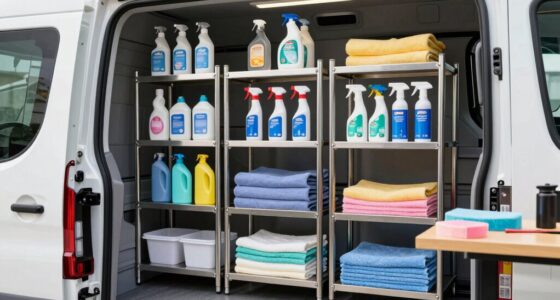

To train new cleaners without overloading your top staff, break training into manageable sessions focusing on key skills. Schedule these sessions carefully to avoid disrupting daily operations, and involve experienced staff selectively for demonstrations and feedback. Clear communication and setting expectations help prevent misunderstandings. Use training tools and techniques that maximize efficiency, keeping your team motivated and cohesive. Keep the balance right, and you’ll develop confident cleaners without overburdening your best team members. If you’re interested in more strategies, keep exploring how to optimize your training process.

Get cleaning gear delivered free with Prime
- Fast, free delivery on millions of items
- Prime Video, Amazon Music and more included
- Member-only deals all year
Key Takeaways
- Assign experienced staff specific roles like demonstrations or feedback to prevent overburdening them.
- Schedule training sessions during less busy times to minimize impact on daily operations.
- Use structured training plans and content management to streamline onboarding and reduce repetitive workload.
- Incorporate peer-to-peer training where less experienced staff learn from each other under supervision.
- Set clear training timelines and responsibilities to manage expectations and avoid overloading your top performers.
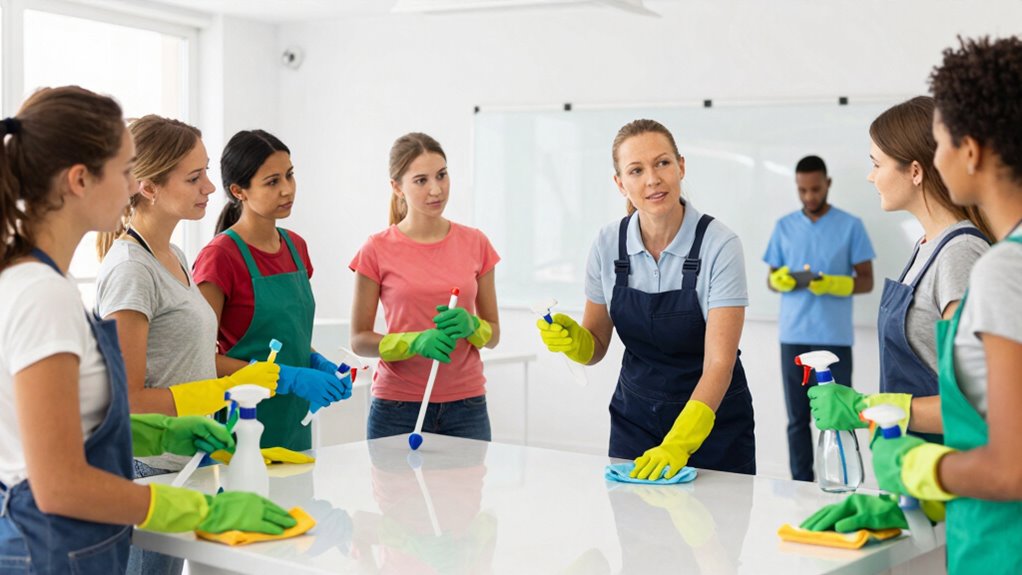
Are you unsure how to effectively train new cleaners? You’re not alone. Balancing the need to onboard new team members without overloading your best staff can be challenging. The key lies in strategic planning around time management and team communication. When you approach training with clear structures, you create a smoother process that benefits everyone involved. Start by breaking down training into manageable segments, focusing on essential skills first. This prevents your experienced staff from feeling overwhelmed and ensures new cleaners gain confidence step by step. Allocate specific time blocks for training sessions, so your team members know what to expect and can plan accordingly. Using a schedule helps maintain productivity and keeps training consistent without disrupting daily operations.
Effective training balances time management and clear structure to develop confident, efficient cleaners without overloading your team.
Effective team communication is vital here. Make sure your trainers clearly explain their expectations, and encourage open dialogue. When new cleaners ask questions, respond promptly and thoughtfully. This builds trust and ensures misunderstandings are addressed early. Additionally, involve your experienced staff in the training process, but do so selectively. Assign them specific roles, such as demonstrating techniques or providing feedback, rather than making them responsible for the entire training. This approach prevents burnout and keeps team morale high. It also fosters a collaborative environment where everyone feels valued and part of a common goal. Incorporating content management strategies can further streamline training and ensure consistency across your team. Additionally, utilizing efficient training techniques can help you maximize the impact of your training sessions. To further optimize the process, consider implementing training scheduling tools that help coordinate various sessions and responsibilities seamlessly. Incorporating indoor air quality principles can also promote a healthier, more sustainable workspace, which in turn enhances team well-being and productivity.
In the end, successful training hinges on balancing thoroughness with efficiency. By managing time wisely and fostering clear team communication, you empower new cleaners to become competent quickly, without draining your best staff. This strategic approach ensures your cleaning team remains productive, motivated, and cohesive—ready to deliver top-quality service every day.
cleaning training schedule planner
As an affiliate, we earn on qualifying purchases.
As an affiliate, we earn on qualifying purchases.
Frequently Asked Questions
How Long Should Training Sessions Last for New Cleaners?
Training sessions for new cleaners should last around 1 to 2 hours each, depending on the complexity of tasks. Keep the training duration manageable to maintain focus and avoid fatigue. Schedule sessions over several days or weeks, allowing time for practice and questions. Effective session scheduling guarantees new cleaners learn efficiently without overwhelming your best staff, who can then support the training process without feeling overburdened.
What Materials Are Essential for Effective Cleaning Training?
Imagine equipping your team like a well-oiled machine—your training materials are the essential parts. Focus on clear manuals covering cleaning techniques and safety protocols, step-by-step guides, and visual aids like videos or diagrams. Practical demonstrations are invaluable, allowing your new cleaners to see techniques firsthand. These materials guarantee they learn efficiency and safety, helping them become confident, competent team members without overburdening your top staff.
How to Assess a New Cleaner’s Progress Quickly?
You can assess a new cleaner’s progress quickly by using clear performance metrics like cleanliness standards, punctuality, and attention to detail. Implement regular feedback strategies such as brief check-ins and constructive critiques to gauge their understanding and improvement. Observe their work consistently, compare it to your benchmarks, and note their ability to follow procedures. This approach helps you identify strengths and areas needing development efficiently, ensuring they’re on the right track.
Should Training Be Hands-On or Theoretical?
Training should be hands-on rather than purely theoretical. Practical training offers visual, real-world experience, helping new cleaners grasp techniques faster and retain skills longer. While theoretical instruction introduces foundational knowledge, it shouldn’t guarantee training duration. Combining both ensures efficient learning without overloading your best staff. The balance allows new cleaners to develop confidence quickly, reducing mistakes and increasing overall cleaning quality.
How to Handle Language Barriers During Training?
You handle language barriers by using simple, clear language and visuals to support your instructions. Encourage effective communication by speaking slowly, using gestures, and confirming understanding through demonstrations. Consider providing translated training materials or pairing new cleaners with bilingual mentors. Regular check-ins help guarantee they grasp tasks properly. These steps create an inclusive environment, improve comprehension, and boost confidence, making training more effective despite language differences.
Conclusion
As you train new cleaners, remember that patience and clear guidance are your best tools. Picture your seasoned staff gently passing the mop to a new team member, both smiling as they work together smoothly. That seamless transfer of knowledge, like a well-choreographed dance, keeps your team strong without overburdening anyone. When you foster teamwork and confidence, everyone benefits — and your cleaning operation runs effortlessly, just like a perfectly synchronized routine.
Halloween Picks
halloween
As an affiliate, we earn on qualifying purchases.