To size a portable power station for your job site, first list all tools and devices you’ll run simultaneously and note their wattage ratings. Then, estimate how long each will operate daily to calculate total energy needs in watt-hours. Choose a power station with capacity surpassing this total to guarantee reliable operation and room for future expansion. If you’re interested in optimizing your setup and ensuring long-term performance, keep exploring for more helpful tips.
Key Takeaways
- List all tools and equipment to determine total wattage and daily energy needs.
- Calculate total watt-hours (Wh) required by multiplying device wattage by usage hours.
- Choose a power station with capacity exceeding your total energy requirement for flexibility.
- Consider future device additions and potential expansion when sizing capacity.
- Ensure compatibility with solar panels to extend operational time and promote sustainable charging.
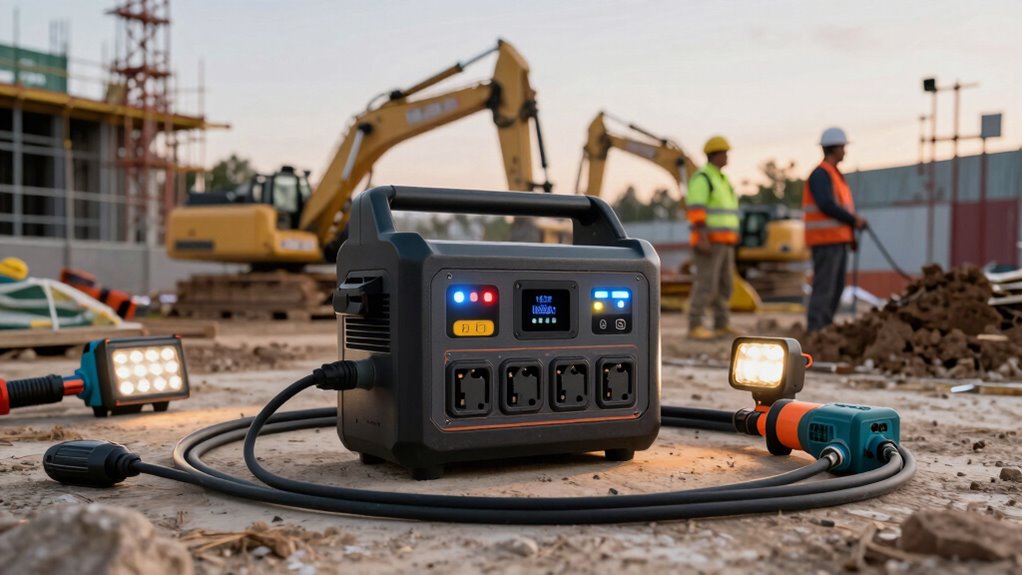
Portable power stations have become essential for anyone who needs reliable electricity on the go. When you’re working on job sites, especially in remote locations, having a power source that’s both versatile and dependable can make or break your project. To guarantee you get the right amount of power without overspending or risking insufficient energy, you need to learn how to size your battery power accurately. This process involves understanding your power demands, how to optimize solar panel integration, and managing your battery lifespan effectively.
First, assess your power requirements carefully. Make a detailed list of all the tools, devices, and equipment you plan to run simultaneously. Check their wattage ratings and estimate how long you’ll need them to operate each day. This helps you determine the total energy consumption in watt-hours (Wh). For example, if you have tools that draw 100W and you need them running for five hours, that’s 500Wh. Summing up all devices gives you a baseline for selecting a power station with enough capacity.
Once you’ve established your energy needs, you should consider solar panel integration as a key way to recharge your power station sustainably. A well-matched solar panel setup can extend your operational time, especially on long job days. Ensure that your chosen power station is compatible with portable solar panels, and understand the optimal charging capacity. Proper solar integration not only boosts your energy independence but also reduces reliance on grid power, which is often unavailable at remote sites.
Managing your battery lifespan is equally important. Batteries degrade over time, especially if they’re constantly discharged or overcharged. To maximize their longevity, follow best practices such as avoiding deep discharges—keeping the state of charge between 20% and 80%—and using appropriate charging cycles. Many modern power stations have smart battery management systems that help regulate charging and discharging, preventing damage and prolonging battery health. Additionally, if you plan to store your power station for an extended period, keep the battery in a cool, dry place and recharge it periodically to prevent capacity loss. Being aware of battery maintenance techniques can significantly enhance the longevity and performance of your power station.
Frequently Asked Questions
How Long Do Portable Power Stations Typically Last on a Full Charge?
A portable power station typically lasts between 4 to 12 hours on a full charge, depending on its battery capacity and the power draw of your devices. You can expect it to handle about 500 to 1,000 charging cycles before its capacity drops markedly. To maximize its lifespan, avoid deep discharges and keep it well-maintained. Always choose a station with sufficient battery capacity for your specific job site needs.
Can Portable Power Stations Handle Multiple Devices Simultaneously?
Yes, portable power stations can handle multiple devices simultaneously, but it depends on their power management and device compatibility. You should check the station’s total wattage capacity and guarantee your devices’ power requirements don’t exceed it. By managing your device connections wisely and selecting a power station with sufficient output, you can efficiently run several tools or gadgets at once without overloading the system.
What Is the Best Way to Maintain and Store a Portable Power Station?
Sure, because who wouldn’t love a perfectly maintained power station? To keep yours in top shape, regularly perform battery calibration to make certain accurate readings. Store it in a cool, dry environment—think of it as a spa day for your device. Avoid extreme temperatures and direct sunlight, and keep it charged to around 50% if you’re not using it for a while. Your power station will thank you with reliable performance!
Are Portable Power Stations Safe to Use Outdoors in Different Weather Conditions?
Yes, portable power stations are generally safe outdoors if they have weather resistance features and corrosion protection. Make sure you choose a model with proper weather resistance to handle rain, snow, or dust, and corrosion protection to prevent damage from moisture or humidity. Always follow manufacturer guidelines, keep vents clear, and store the power station properly when not in use to guarantee safe operation in varying weather conditions.
How Does Temperature Affect the Performance of Portable Power Stations?
Temperature crucially impacts your portable power station’s performance. When it’s too hot or cold, battery efficiency drops because temperature regulation struggles, causing reduced runtime and potential damage. Extreme temperatures can also hinder charging and discharging processes. To keep your station working at its best, store it in a temperature-controlled environment and avoid exposing it to harsh weather. Proper temperature regulation guarantees maximum battery efficiency and longer-lasting power for your job site needs.
Conclusion
When choosing a portable power station, consider your power needs, your run time, and your future growth. Assess your devices, plan your usage, and select the right capacity. Prioritize portability, reliability, and expandability to guarantee your job site stays powered. Stay prepared, stay efficient, and stay confident that you’ve chosen the perfect solution. Because the right power station isn’t just about today, it’s about powering your work tomorrow, every day, without interruption.