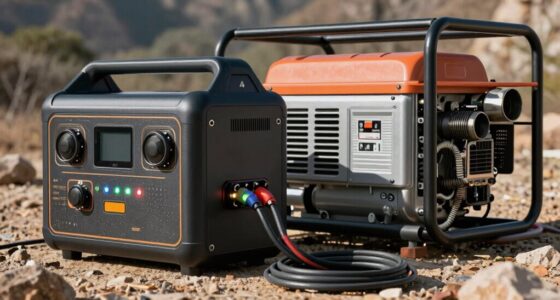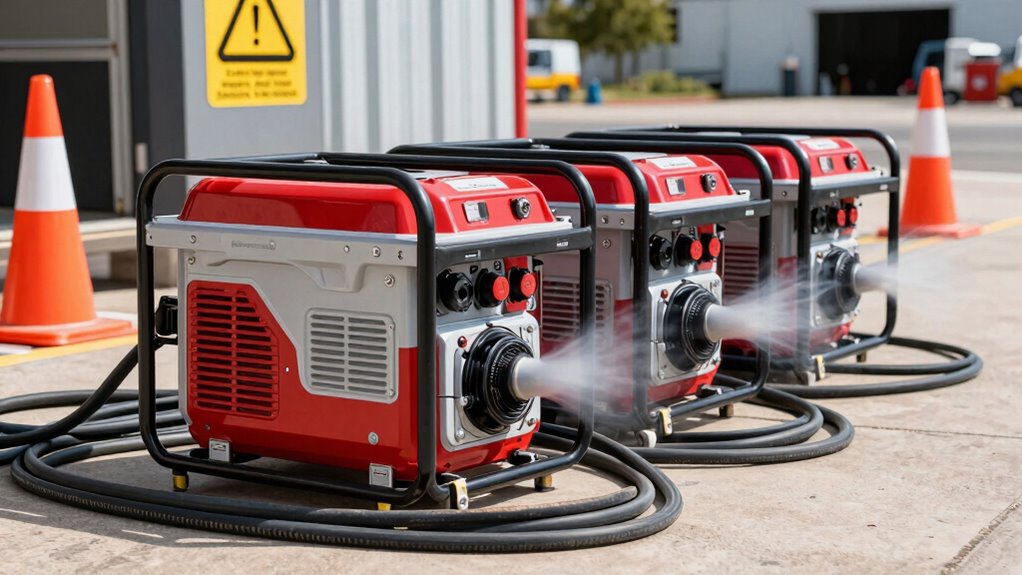

When choosing inverter generators for mobile cleaning, prioritize models with noise levels below 60 dB to keep operations discreet and professional. Always guarantee proper safety by grounding the generator, adhering to manufacturer guidelines, and positioning it outdoors away from vents or windows to prevent fumes from entering indoor spaces. Use quality extension cords and conduct regular safety checks. For thorough tips on sound and safety practices, continue exploring the full checklist tailored for your mobile cleaning needs.
Key Takeaways
- Choose inverter generators with noise levels below 60 dB for quieter operation during mobile cleaning tasks.
- Always operate generators outdoors in well-ventilated areas, maintaining a safe distance from windows, doors, and vents.
- Ensure proper grounding, correct setup, and adherence to manufacturer instructions to prevent electrical hazards.
- Regularly inspect oil levels, cords, and perform maintenance to ensure safe, reliable performance.
- Use appropriately rated extension cords and keep safety equipment like fire extinguishers nearby.
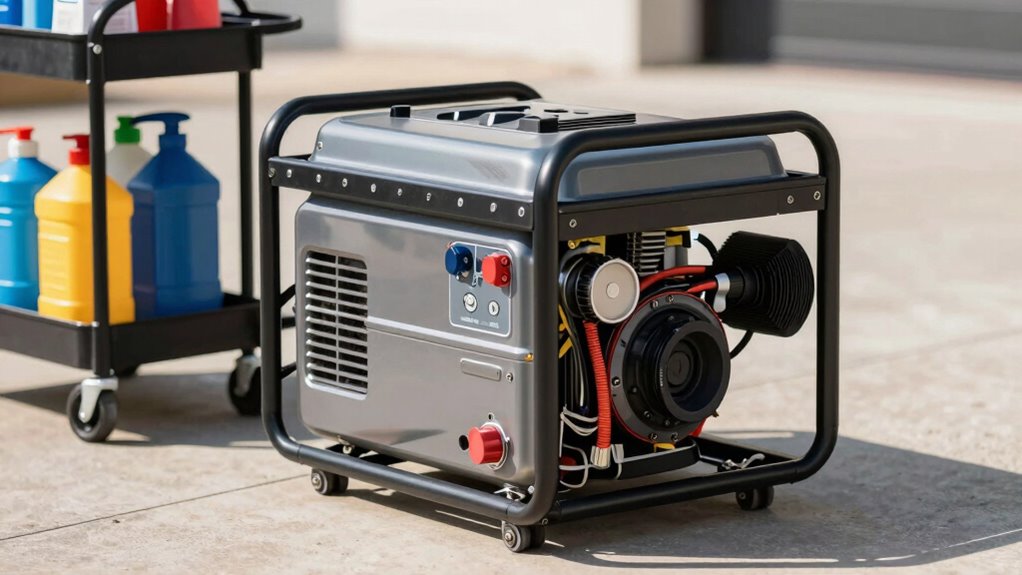
When it comes to mobile cleaning jobs, having a reliable power source is vital, and inverter generators are an excellent choice. They provide clean, stable power that keeps your equipment running smoothly, no matter where your job takes you. But beyond just power output, you need to consider how quiet the generator is and how well it adheres to safety protocols. Noise reduction is essential, especially if you’re working in residential areas or tight spaces where loud sounds can disturb clients or neighbors. Inverter generators are designed to operate more quietly than traditional models, making them ideal for sensitive environments. Their noise levels are often measured in decibels, and many models emit sound levels below 60 dB, comparable to a normal conversation. This quiet operation not only improves client satisfaction but also helps maintain a professional presence on site. When choosing a generator, look for models with noise reduction features like sound-dampening enclosures or mufflers, which can greatly lower the noise output. Remember, reduced noise doesn’t mean compromised power; you can still get reliable performance while keeping the environment peaceful. Additionally, selecting models with advanced noise-canceling technology can further enhance quiet operation during use.
Safety protocols are equally important when operating portable power sources. You must guarantee that your inverter generator is used correctly to prevent accidents and damage. Always read the manufacturer’s instructions thoroughly before setting up your generator. Proper grounding is essential to avoid electrical hazards; make sure your generator is grounded according to the guidelines to prevent shocks or fires. Never overload your generator—know its wattage capacity and only connect equipment within those limits. Also, position the generator outdoors and in well-ventilated areas to avoid carbon monoxide buildup, which can be deadly if inhaled in enclosed spaces. Keep a safe distance from windows, doors, and vents to prevent exhaust fumes from entering buildings. Using extension cords that are rated for outdoor use and appropriate power loads helps prevent overheating and electrical failures. Regular maintenance, like checking oil levels and inspecting cords, guarantees your generator operates safely and efficiently. Establishing safety protocols also means training yourself and any team members on proper startup, shutdown, and emergency procedures. Having a fire extinguisher nearby and knowing how to use it is a smart precaution, especially when working with electrical equipment outdoors.
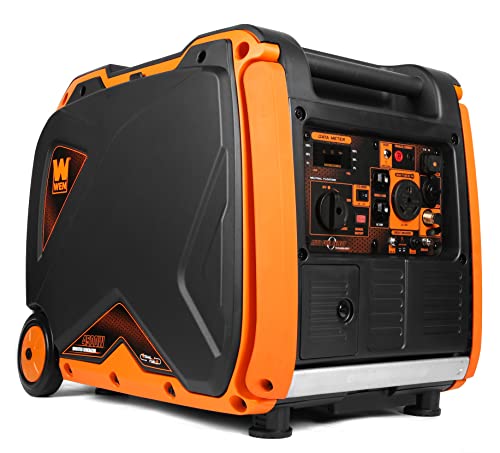
WEN DF450i Super Quiet 4500-Watt Dual RV-Ready Portable Inverter Generator with Fuel Shut-Off
- Dual Fuel Compatibility: Runs on gasoline and propane
- Auto Fuel Switching: Automatically switches fuel types
- Quiet Operation: Operates at 58 dBA at quarter load
As an affiliate, we earn on qualifying purchases.
As an affiliate, we earn on qualifying purchases.
Frequently Asked Questions
How Long Can Inverter Generators Run Continuously?
You can typically run inverter generators continuously for about 8 to 12 hours, depending on their fuel efficiency and power output. Higher-capacity models with better fuel economy can operate longer without refueling, making them ideal for mobile cleaning jobs. Just remember to monitor fuel levels regularly and follow safety guidelines to guarantee safe, uninterrupted power during extended use. Proper maintenance also helps maximize runtime and efficiency.
Are Inverter Generators Suitable for Outdoor Weather Conditions?
A stitch in time saves nine, so you should know inverter generators are generally suitable for outdoor weather conditions. They come with weather resistance and corrosion protection features that shield them from elements like rain and humidity. However, it’s wise to use additional covers or enclosures for prolonged exposure. Always check your model’s specifications and maintenance guidelines to guarantee ideal performance and longevity outdoors.
Do Inverter Generators Require Regular Maintenance?
Yes, inverter generators do require regular maintenance to stay efficient and reliable. You should follow a consistent maintenance schedule, including oil changes, filter checks, and spark plug replacements. Proper upkeep helps guarantee fuel efficiency and prolongs the generator’s lifespan. By staying on top of maintenance, you’ll keep your inverter generator running smoothly, reducing the risk of breakdowns and optimizing performance for your mobile cleaning needs.
Can Inverter Generators Be Used Indoors Safely?
Yes, you can use inverter generators indoors safely if you follow safety precautions. They typically produce lower noise levels, making them more suitable for indoor use. However, confirm proper ventilation to avoid carbon monoxide buildup and keep the generator in a well-ventilated area. Always read the manufacturer’s safety instructions, use carbon monoxide detectors, and keep a safe distance from windows and vents to ensure safe operation indoors.
What Is the Typical Lifespan of an Inverter Generator?
You might be surprised, but inverter generators typically last 10,000 to 20,000 hours of use, depending on maintenance. Regularly checking fuel efficiency and noise levels can extend their lifespan, ensuring they run smoothly longer. Proper care, like changing oil and keeping vents clear, helps you avoid early wear. So, with good upkeep, your inverter generator can serve you reliably for years, making it a smart investment.
Conclusion
When choosing an inverter generator for your mobile cleaning needs, prioritize noise levels and safety features to keep your operation smooth and secure. Think of it like a trusted friend who’s always there in the background, quietly supporting your work without causing a disturbance. By following the checklist, you guarantee your equipment runs efficiently and safely, giving you peace of mind. Stay prepared, stay safe, and let your mobile cleaning business shine like a well-oiled machine.