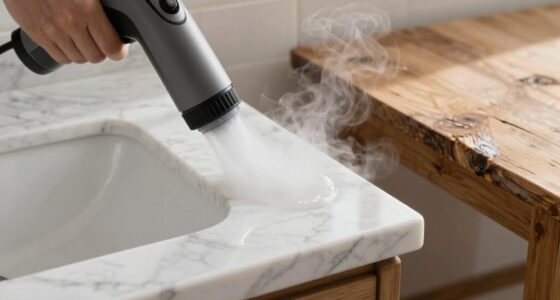
To handle cleaning in homes with hard water buildup, start by using vinegar or commercial lime scale removers on fixtures and glass to dissolve mineral deposits. Wrap soaked cloths around affected areas and scrub gently after soaking. Regularly wipe down surfaces and use water softeners or filters to prevent future buildup. For stubborn deposits, apply a solution and wait before scrubbing. Keep exploring for tips on maintaining a spotless home despite mineral deposits.

Get cleaning gear delivered free with Prime
- Fast, free delivery on millions of items
- Prime Video, Amazon Music and more included
- Member-only deals all year
Key Takeaways
- Regularly clean fixtures and glass with vinegar or commercial lime scale removers to prevent buildup.
- Use water softening systems or filters to reduce mineral content before it deposits.
- Soak affected areas in vinegar and scrub gently to dissolve stubborn mineral deposits.
- Wipe down surfaces after each use to minimize water spots and mineral residue.
- Conduct water quality testing to determine appropriate treatment and prevent future buildup.
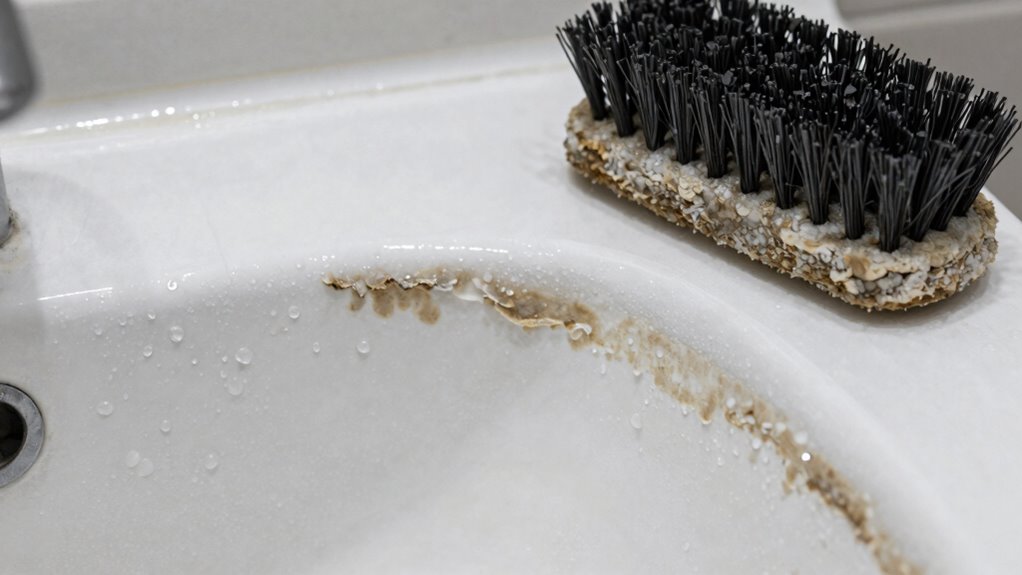
Hard water buildup can quickly turn cleaning into a frustrating chore, but understanding how to tackle it makes all the difference. When mineral deposits accumulate on fixtures, glass, and surfaces, they create stubborn stains and reduce the effectiveness of your cleaning efforts. The key to managing these deposits is water softening, which involves removing or neutralizing the minerals—primarily calcium and magnesium—that cause hard water problems. Installing a water softener system can be a game-changer, as it filters out these minerals before they can deposit onto your fixtures. If a whole-house system isn’t feasible, you can use portable water softening units or salt-based water softening agents in individual appliances like dishwashers and washing machines.
Water softening is essential to prevent mineral deposits and keep your home sparkling and clean.
For existing mineral deposits, you need a targeted approach. Vinegar is your best friend here. Its acetic acid dissolves the mineral buildup on faucets, showerheads, and glass. To use it, soak a cloth or sponge in vinegar and wrap it around the affected area, leaving it to sit for at least 30 minutes. For more stubborn deposits, you might need to scrub gently with a brush or pad after soaking. Remember, regular maintenance prevents these deposits from becoming a massive problem later. Wiping down shower doors and fixtures with a vinegar solution weekly helps keep mineral deposits at bay. Additionally, water quality testing can help you identify the severity of mineral buildup and adjust your cleaning routines accordingly.
Limescale, a common form of mineral buildup, can be particularly tough to remove. Lime scale often forms a crusty layer that’s resistant to standard cleaning. To tackle this, apply a commercial limescale remover or a vinegar solution directly to the surface, letting it sit for 15-20 minutes before scrubbing. Always follow the manufacturer’s instructions, and avoid using abrasive tools that could scratch delicate surfaces. Using a squeegee on shower doors after each use also reduces water spots and mineral buildup, saving you effort in the long run. Additionally, understanding the role of laboratory testing devices in identifying mineral content can help you choose the most effective water treatment options. Regularly testing your water quality allows you to tailor your water treatment methods for optimal results.
Finally, consider using water conditioners or filters on your appliances and faucets. These devices can considerably reduce mineral deposits, making your cleaning routine easier and less frequent. Overall, the secret to handling hard water buildup is consistent maintenance combined with effective water softening techniques. By addressing mineral deposits early and choosing the right cleaning solutions, you’ll keep your home looking clean and prevent costly repairs down the line.
Products Worth Considering

Shark IQ Robot Self-Empty XL Robot Vacuum with Home Mapping, Self-Cleaning Brushroll, and Wi-Fi, Black

Arlo Essential Outdoor Pan-Tilt-Zoom Security Camera, 2K, Wired, 2-Camera System

Levoit Vital 100 Air Purifier for Home Bedroom
As an affiliate, we earn on qualifying purchases.
Frequently Asked Questions
Can Hard Water Buildup Damage Plumbing Over Time?
Yes, hard water buildup can damage your plumbing over time. The mineral deposits cause plumbing corrosion, weakening pipes and leading to leaks. Additionally, the buildup can cause pipe blockages, restricting water flow and increasing pressure that may result in pipe bursts. Regular maintenance and water softening can help prevent these issues, protecting your plumbing system from long-term damage caused by hard water minerals.
Are There Eco-Friendly Cleaning Options for Hard Water Stains?
You can totally tackle hard water stains with eco-friendly options! Natural remedies like vinegar, lemon juice, and baking soda work wonders, transforming stubborn deposits into a thing of the past. Plus, eco-friendly products made from plant-based ingredients are gentle on your surfaces and the planet. This powerful combo fights hard water buildup without harsh chemicals, making your home sparkling clean and eco-conscious at the same time.
How Often Should I Clean Hard Water Deposits?
You should clean hard water deposits at least once a month to prevent buildup, but more frequent cleaning may be necessary in areas with heavy mineral content. Use effective deposit removal techniques like vinegar soak or commercial descalers to tackle stubborn stains. Regular cleaning maintains surfaces and prevents mineral deposits from becoming harder to remove. Adjust your cleaning frequency based on how quickly deposits form in your home for best results.
Do Water Softeners Completely Eliminate Hard Water Problems?
Ever wonder if a water softener completely solves hard water issues? While water softener effectiveness considerably reduces mineral buildup, it doesn’t entirely eliminate hard water problems. Softeners primarily address calcium and magnesium but might miss other minerals or contaminants. Are there alternative treatment options? Yes, systems like reverse osmosis or filtration can complement softeners, ensuring a more all-encompassing approach. You might need a combination to fully tackle all hard water challenges in your home.
Can Hard Water Buildup Affect Appliance Longevity?
Yes, hard water buildup can affect your appliance longevity. Mineral deposits from hard water accumulate inside appliances, leading to clogs and inefficiency. Over time, water corrosion worsens, damaging components and shortening lifespan. You might notice appliances like dishwashers, water heaters, and washing machines working harder or breaking down sooner. Regular maintenance, using water softeners, and cleaning mineral deposits can help protect your appliances from the damaging effects of hard water.
Conclusion
Dealing with hard water buildup can seem like an uphill battle, but with the right strategies, you can keep your home sparkling and residue-free. Regular cleaning, using the right products, and tackling problems early will save you time and stress down the line. Remember, you don’t have to wait for trouble to knock on your door—stay proactive and keep your home in tip-top shape. Sometimes, a stitch in time really does save nine.