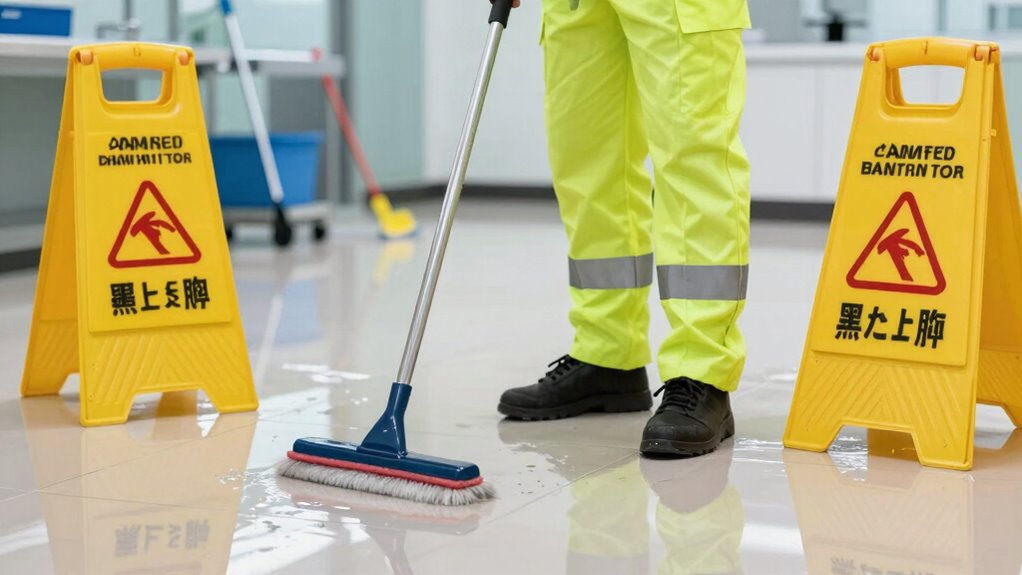

As a cleaning team, you must always be aware that wet floors are a major slip hazard after mopping. You should place wet floor signs prominently and keep them until the surface is completely dry. Use proper techniques to avoid over-wetting, and monitor drying times carefully. Ensuring clear communication and regular safety checks help prevent accidents. If you want to know how to best manage these hazards and protect everyone, there’s more to learn.
Key Takeaways
- Always place wet floor signage prominently and keep it in place until the floor is fully dry.
- Use proper mopping techniques to avoid over-wetting and puddles that increase slip risk.
- Monitor drying progress regularly and expedite drying using fans or ventilation.
- Conduct safety audits to identify and address residual slip hazards after mopping.
- Train staff to recognize, report, and replace wet floor signs promptly to maintain safety.
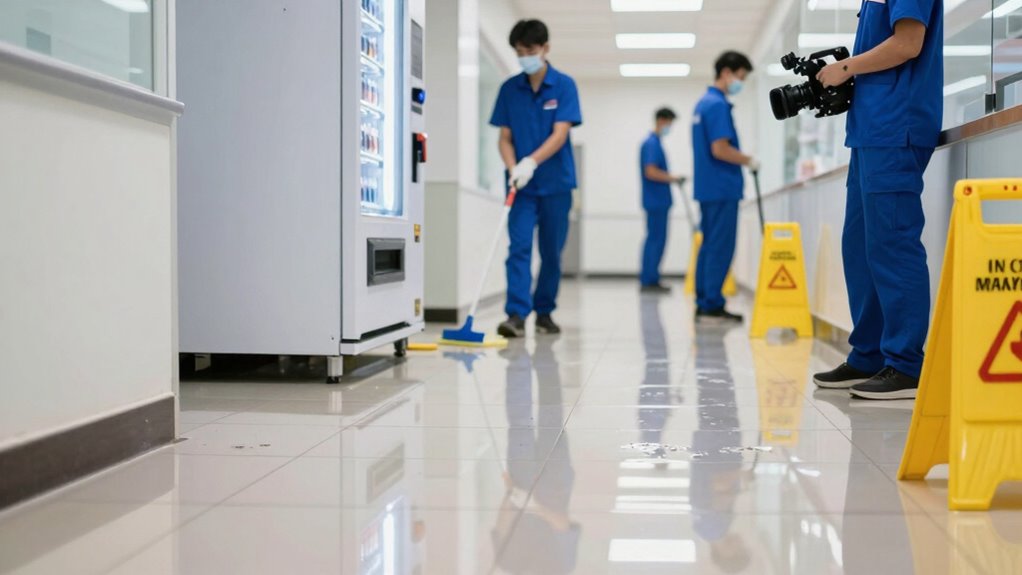
Cleaning teams play a essential role in maintaining safe work environments, but their efforts can inadvertently create slip hazards if proper precautions aren’t followed. After mopping, the floor can be dangerously slick, making it indispensable to use effective safety measures. One of the most straightforward ways to alert others is by placing wet floor signage prominently in the area. These signs serve as a visual warning, reminding everyone to proceed with caution until the floor is dry. Without such signage, employees or visitors might unknowingly walk into a slick spot, risking slips and falls that could lead to injuries or liability issues.
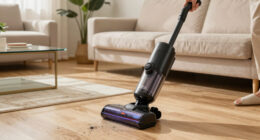
Alongside using wet floor signage, mastering proper mopping techniques is key for reducing slip hazards. You should always start by clearing the area of obstacles and debris, which can interfere with cleaning and contribute to accidents. When mopping, use a clean mop and guarantee it’s properly wrung out to avoid excessive water. Over-wetting the floor increases the risk of creating puddles that take longer to dry and are more hazardous. Instead, aim for a damp mop that effectively cleans without leaving excess water behind. Moving methodically across the floor in straight, overlapping strokes ensures even coverage and minimizes streaks or pooling of water.
Clear debris before mopping, use a damp, properly wrung mop, and work in overlapping strokes for safe, effective cleaning.
Timing is also essential. After mopping, it’s imperative to keep the wet floor signage in place until the surface is thoroughly dry. This usually takes a few minutes, but the exact time depends on the floor material, humidity, and airflow in the area. Using fans or opening windows can speed up drying, helping to clear the hazard quickly. During this period, you should restrict access to the freshly mopped zone or instruct others to avoid walking through it. Consistent monitoring and promptly replacing wet floor signage when the floor is dry help reinforce safety protocols. Additionally, understanding slip hazards and how to mitigate them is crucial for maintaining a safe environment. Properly training staff on cleaning procedures can further reduce the risk of overlooked hazards, especially when safety audits are regularly conducted to identify potential issues before they cause accidents. Incorporating risk assessment practices into routine cleaning procedures can also help highlight areas prone to slipping and ensure proactive measures are taken.
Finally, training yourself and others on proper mopping procedures and the importance of clear communication about wet floors can substantially reduce slip risks. Encourage team members to report any wet spots that might have been missed and remind everyone to look out for wet floor signage. By combining proper mopping techniques with effective signage and vigilant drying, you create a safer environment. Your attention to detail ensures that your cleaning efforts protect everyone from preventable slips and falls, ultimately maintaining a safer and more productive workspace.

WOUSEDO 2-Pack Caution Wet Floor Sign,17.5" Height,Bright Yellow Double-Sided Folding A-Shaped Frame Design, Bilingual Caution Message
Conspicuous Warning: Bright yellow and obvious signs that can be seen from a distance to increase pedestrian alertness
As an affiliate, we earn on qualifying purchases.
As an affiliate, we earn on qualifying purchases.
Frequently Asked Questions
How Long Should Floors Dry Before Reopening to Foot Traffic?
You should wait at least 30 minutes for floors to dry after mopping before reopening to foot traffic, depending on the mopping techniques and floor type. Incorporate drying times into your cleaning schedules to guarantee safety. Use proper mopping techniques like overlapping strokes and avoid excessive water to speed up drying. Always check the floor’s surface for wetness before allowing foot traffic, preventing slip hazards effectively.
Are Specific Cleaning Products More Slip-Resistant Than Others?
Some cleaning solutions and floor treatments are more slip-resistant than others, helping you stay one step ahead of hazards. Look for products labeled as slip-resistant or with textured formulas designed to improve grip. Using specialized cleaning solutions and floor treatments can make a big difference. Keep in mind, choosing the right products is like putting your best foot forward—making sure the surface stays safe and slip-free after mopping.
What Footwear Provides the Best Slip Resistance Post-Mopping?
You should choose footwear with slip-resistant soles designed for wet surfaces, like shoes with rubber or textured outsoles. When considering mopping techniques and footwear selection, prioritize shoes that offer good grip and stability. Proper footwear helps prevent slips after mopping, especially during quick or extensive cleaning tasks. Always guarantee your shoes are clean and dry, and avoid worn-out soles that can compromise safety on freshly mopped floors.
How Often Should Slip Hazard Assessments Be Conducted?
You should conduct slip hazard assessments regularly, ideally weekly, to catch potential dangers early. Picture walking across a freshly mopped floor—your slip resistant footwear might save you if the texture analysis shows a surface prone to slipping. Frequent inspections help identify changes in floor texture, ensuring safety measures stay effective. By staying vigilant, you keep your team protected and prevent accidents before they happen, maintaining a safe environment for everyone.
Can Certain Floor Types Be More Prone to Slipping After Cleaning?
Certain floor types, like polished tiles or smooth vinyl, are more prone to slipping after cleaning because their texture is less abrasive, reducing traction. You should consider cleaning frequency; over-cleaning can leave residue that increases slipperiness, while under-cleaning may cause buildup that also poses risks. Regularly assess floor texture and adjust your cleaning routine accordingly, ensuring you use proper slip-resistant products and warn others about wet surfaces to prevent accidents.

Creative Safety Supply Mop Bucket Text Floor Sign – (12in x 12in) Self-Adhesive, Industrial Grade Vinyl
HIGH VISIBILITY — Features bold graphics and a sharp print quality. Each floor sign is designed to provide…
As an affiliate, we earn on qualifying purchases.
As an affiliate, we earn on qualifying purchases.
Conclusion
So, as you finish mopping, remember that slip hazards often follow close behind. Stay vigilant, use warning signs, and give floors ample time to dry—because a moment’s oversight can lead to a fall. It’s no coincidence that safety and cleanliness go hand in hand; each step you take to prevent slips keeps everyone safer. In the end, careful attention turns a routine task into a safeguard, making slip hazards just another part of your thorough cleaning routine.
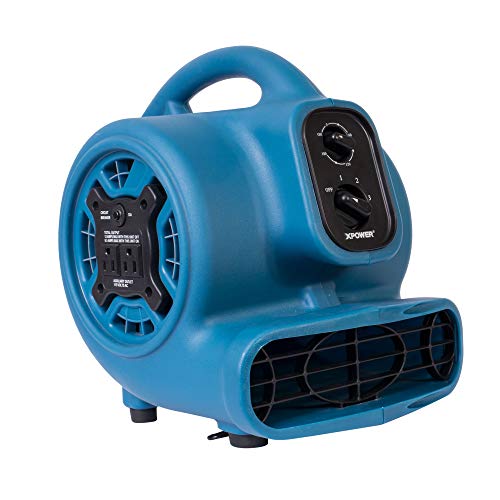
XPOWER P-230AT Mini Mighty 1/4 HP 925 CFM Centrifugal Air Mover, Carpet Dryer, Floor Fan, Blower, Stackable, Daisy Chain, for Water Damage Restoration, Janitorial, Plumbing, Home Use
FASTER SURFACE DRYING–Speed-dry carpets, floors, furniture, windows, and walls with acentrifugal air mover! By producing a powerful, focused…
As an affiliate, we earn on qualifying purchases.
As an affiliate, we earn on qualifying purchases.

SinoPack Anti Slip Tape Black and Yellow 6in x 40ft, Heavy Duty Grip Tape for Stairs, Ramps, Truck Steps, Floors, Waterproof Non-Slip Traction Tape for Indoor & Outdoor Safety Hazard Warning
High traction to prevent slips -Our premium commercial grade black yellow anti-slip adhesive tape provides a durable and…
As an affiliate, we earn on qualifying purchases.
As an affiliate, we earn on qualifying purchases.