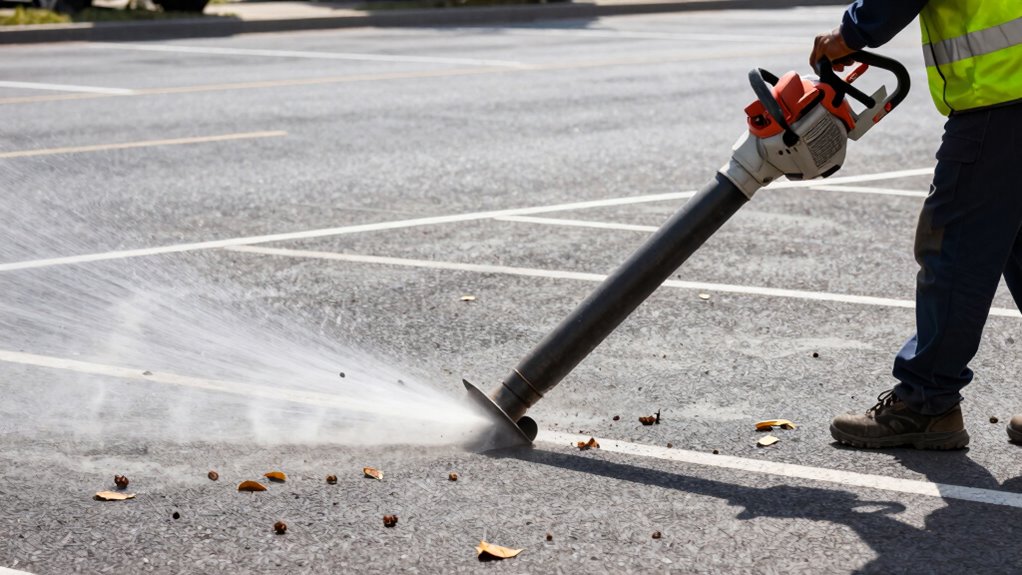

Electric leaf blowers are ideal for commercial cleanup because they efficiently move leaves and debris without kicking up massive dust clouds or causing noise disruptions. They run quietly, help you comply with local regulations, and produce fewer emissions, making your work more environmentally friendly. Lightweight and easy to operate, they reduce fatigue and improve productivity. For more tips on selecting the best model for your needs, check out further details you’ll find as you explore options.
Key Takeaways
- Electric leaf blowers operate quietly, reducing dust disturbance and noise pollution during debris cleanup.
- Their powerful airflow efficiently moves debris without stirring up excessive dust storms.
- Cordless models provide flexible maneuverability, enabling precise debris removal in confined or sensitive areas.
- The absence of gas emissions minimizes airborne dust and pollutants, promoting cleaner air quality.
- Their lightweight design lessens user fatigue, allowing controlled, dust-free debris management over large areas.
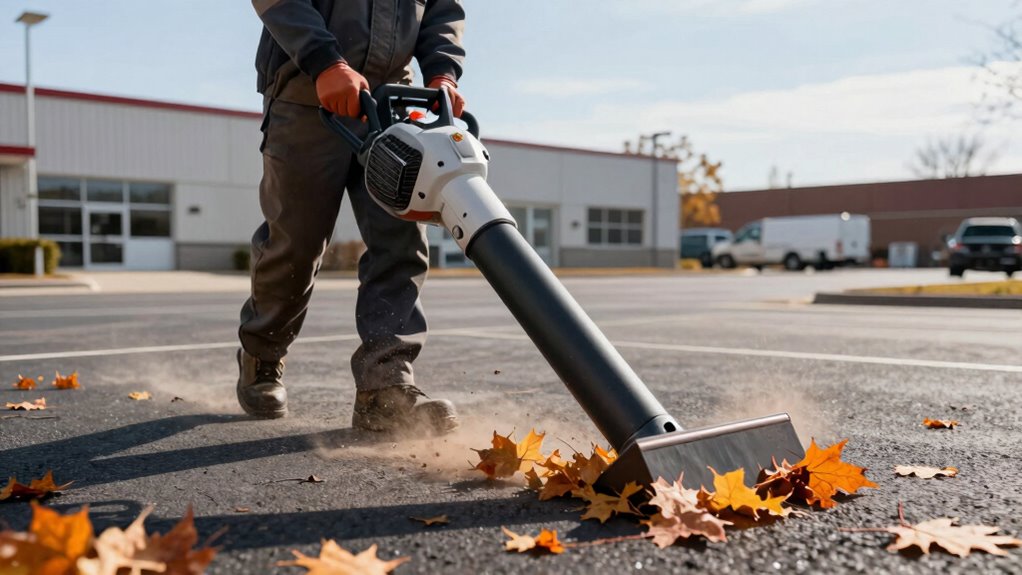
Are leaf blowers essential tools for efficient commercial cleanup? If you’re looking to streamline your outdoor maintenance, electric models might be the perfect choice. They’re lightweight, easy to start, and require less maintenance than gas-powered options. Plus, they produce fewer emissions, making them a more environmentally friendly option. Many commercial operators prefer electric blowers because they can handle large areas quickly without the hassle of dealing with fuel or oil. Their design allows for easy maneuverability, especially in tight or crowded spaces, which can significantly speed up your workflow.
Electric leaf blowers offer lightweight, efficient, eco-friendly performance ideal for commercial cleanup.
One of the key advantages of electric models is their noise reduction capabilities. Traditional gas-powered blowers can be loud and disruptive, especially in urban or noise-sensitive environments. Electric blowers operate more quietly, allowing you to work efficiently without disturbing nearby businesses or residents. This noise reduction isn’t just about comfort; it also helps you comply with local noise ordinances, avoiding fines or restrictions. You’ll find that electric models make cleanup less intrusive, which is a major benefit when working in commercial settings like shopping centers, parks, or school campuses.
When considering electric leaf blowers, pay attention to their power source—corded or cordless. Corded models provide consistent power and are ideal for large, open areas where you can easily extend the cord. However, they limit your mobility somewhat, so you’ll need to plan your cord management carefully. On the other hand, cordless electric blowers offer greater freedom of movement, making it easier to cover diverse terrains without worrying about cords tangling or running out of juice. Modern lithium-ion batteries deliver impressive run times and quick charging, ensuring you won’t be waiting around long between jobs.
Efficiency is another reason to opt for electric models. They start instantly with a switch, unlike gas blowers that require pulling a starter cord. This saves you valuable time, especially when you’re managing multiple sites. Moreover, electric blowers tend to be lighter, reducing fatigue during extended use—an important factor when tackling large commercial cleanup projects. Their maintenance is also simpler: no oil changes, spark plugs, or carburetor adjustments needed, so you can focus on the job instead of troubleshooting mechanical issues. Additionally, power sources and their availability influence your operational flexibility, making electric blowers a practical choice for many commercial tasks.
Frequently Asked Questions
Are Battery-Powered Leaf Blowers Effective for Large Commercial Areas?
Battery-powered leaf blowers can be effective for large commercial areas if you choose models with strong power capacity and long battery life. They offer convenience and reduce noise, but you need to take into account their battery endurance and power output to handle extensive debris. Opt for high-capacity batteries and powerful motors to guarantee consistent performance. Regular maintenance and quick swapping batteries help you maintain efficiency during large cleanup jobs.
How Do Commercial Leaf Blowers Compare in Noise Levels?
Think of commercial leaf blowers as the whispering winds of the industry. They typically have lower decibel levels compared to residential models, making them quieter. Their noise comparison shows they produce less disruptive sound, often below 70 decibels, which helps maintain a professional environment. You’ll appreciate the balance of power and reduced noise, allowing efficient cleanup without disturbing nearby clients or workers.
What Safety Gear Is Recommended When Operating Heavy-Duty Blowers?
When operating heavy-duty blowers, you should wear protective eyewear to shield your eyes from debris, hearing protection to prevent damage from noise, and dust masks to avoid inhaling dust particles. Gloves are essential to protect your hands from vibrations and abrasions. Always make sure your safety gear fits well and is appropriate for the task, so you can work efficiently while minimizing health risks.
Can Leaf Blowers Be Used on Wet Debris?
Yes, you can use leaf blowers on wet debris, but moisture impact affects their effectiveness. Wet debris tends to stick together and is heavier, making it harder to move with a blower. You might find that it takes longer and requires more power. Be cautious, as wet debris can clog the blower or cause damage. Using a blower designed for heavy-duty or damp conditions can improve results and reduce wear.
What Maintenance Is Required for Long-Term Use of Commercial Blowers?
Maintaining your commercial blower is essential for consistent performance. Regularly check and replace filters, guarantee spark plugs are clean, and inspect cooling fins to optimize engine durability. Use high-quality fuel to boost fuel efficiency and prevent engine strain. Additionally, clean air vents and lubricate moving parts to avoid overheating. By sticking to these simple steps, you’ll keep your blower running smoothly and prolong its lifespan for long-term use.
Conclusion
Think of leaf blowers as your trusted steed in the battle against chaos. With the right equipment, you tame the wild, turning a messy battlefield into a clean, peaceful domain. When you choose the right leaf blower, you’re not just moving debris—you’re guiding it away like a gentle wind dispersing storm clouds. Let your tools be the breeze that clears the sky, leaving behind order and calm in your wake.