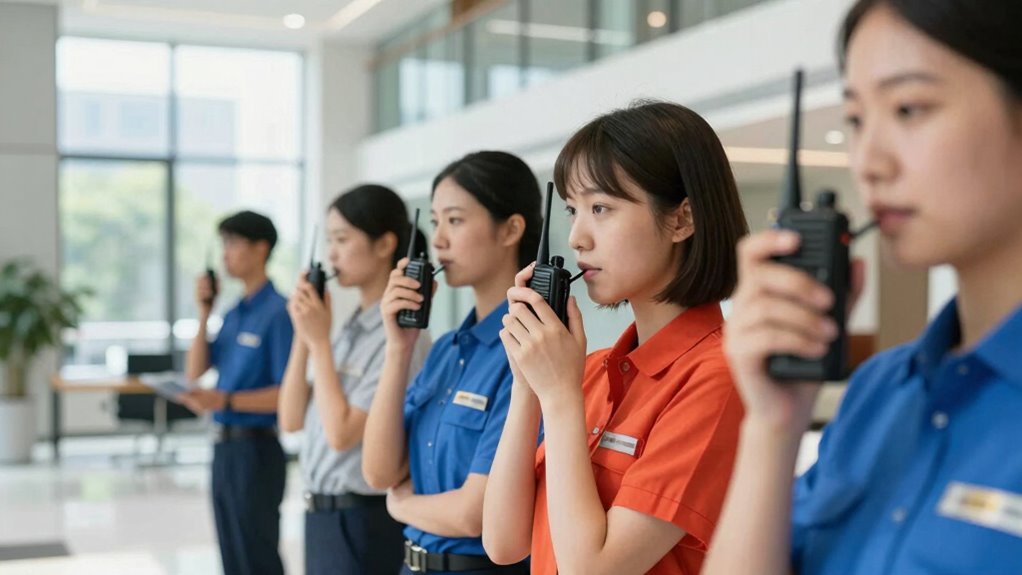

To prevent chaos, follow simple radio channel rules like speaking clearly, keeping messages brief, and identifying yourself and your location. Always stay on designated channels, avoid unnecessary chatter, and listen before responding. Use respectful, professional language and report issues calmly. Regularly check and maintain your radios to guarantee they’re working correctly. Mastering these rules helps your team stay organized and safe, and if you keep exploring, you’ll discover more ways to improve your communication skills.
Key Takeaways
- Establish clear channel protocols to organize communication and prevent overlapping messages during cleaning operations.
- Train team members on radio etiquette, emphasizing brevity, clarity, and professionalism to reduce confusion.
- Assign specific channels or codes for different tasks or areas to streamline coordination and avoid chaos.
- Encourage regular checks and maintenance of radios to ensure reliable communication and minimize technical issues.
- Promote disciplined radio use by monitoring compliance and addressing misuse to maintain order on communication channels.
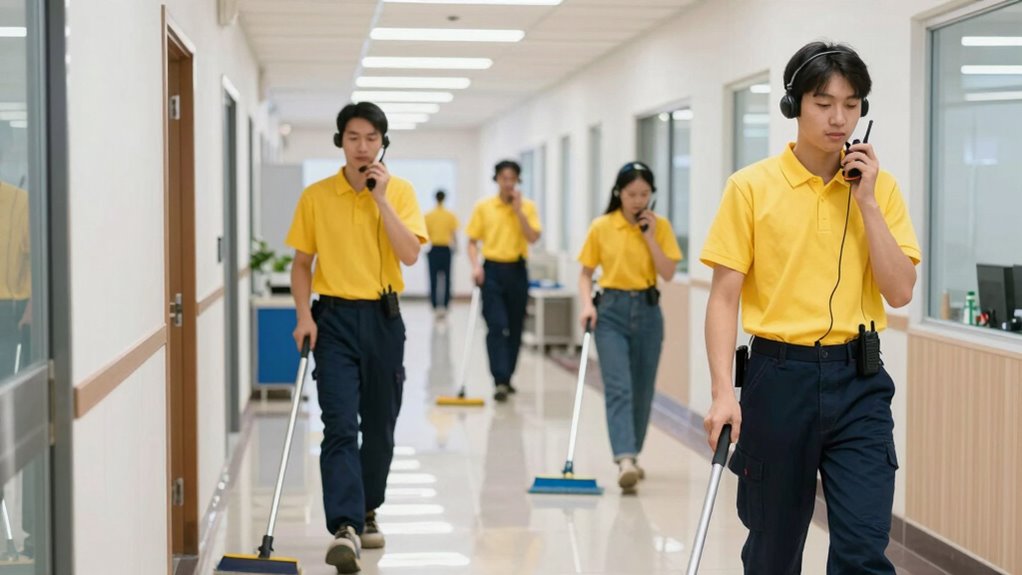
Effective communication is essential for cleaning teams to work efficiently and safely. When you’re coordinating tasks across large facilities or busy schedules, two-way radios become invaluable tools. However, to maximize their effectiveness, you need to understand proper radio etiquette and stay on top of maintenance tips. These practices help prevent misunderstandings that could lead to delays or safety hazards, ensuring your team operates smoothly.
Radio etiquette is about clear, respectful, and professional communication. When you speak, keep your messages brief and to the point. Identify yourself and your location before relaying information, so team members quickly understand who’s speaking and where they are. Avoid unnecessary chatter or long-winded messages that can clog channels and cause confusion. Use proper language—no slang or abbreviations that might be misunderstood—and always listen before responding. This ensures you’re not interrupting ongoing conversations and helps maintain a respectful environment. If you need to call for assistance or report an issue, do so calmly and clearly, specifying the nature of the problem and your location. This reduces the risk of miscommunication and speeds up response times. Additionally, understanding channel management helps prevent communication overlaps and keeps the team coordinated effectively.
Maintaining your radios is just as important as knowing how to communicate effectively. Regular maintenance tips include checking batteries frequently to ensure they’re fully charged, especially before shifts begin. Carry spare batteries or chargers if possible, so you’re never caught without power. Keep your radios clean and free of dust or debris, which can interfere with sound quality. Inspect the device for any visible damage, such as cracks or loose parts, and address issues promptly to prevent malfunctions during critical moments. Firmware updates or software resets can also improve performance and fix bugs, so stay informed about manufacturer recommendations. Proper storage is essential; store radios in a dry, cool place when not in use to extend their lifespan. If your team works in environments with water or moisture, consider waterproof or rugged models that can withstand tough conditions.
Frequently Asked Questions
How Do I Choose the Best Two-Way Radio for My Cleaning Team?
To choose the best two-way radio for your cleaning team, focus on radio channel selection and emergency communication protocols. Pick a model with clear, reliable channels that are easy to switch between, ensuring your team stays coordinated. Look for features like quick access to emergency channels and robust build quality. This way, you’ll enhance safety, streamline communication, and prevent chaos during busy cleaning shifts.
What Is the Typical Range of Cleaning Team Radios?
Ready for reliable communication? Typically, cleaning team radios offer a range of 1 to 5 miles, depending on interference issues and frequency options. You might face interference issues in dense buildings or crowded areas, which can limit your effective range. Selecting radios with versatile frequency options helps you avoid interference and extend your reach, ensuring seamless, spot-on coordination across your cleaning crew regardless of obstacles.
Are Two-Way Radios Waterproof and Dustproof?
Yes, two-way radios designed for cleaning teams often feature waterproof durability and dustproof protection, making them ideal for tough environments. You can rely on these radios to withstand splashes, rain, and dusty conditions without losing performance. Their rugged build ensures continuous communication, even in challenging settings. With waterproof and dustproof features, you won’t have to worry about equipment failure, keeping your team connected and productive throughout every cleaning task.
How Long Do Batteries Last on Cleaning Radios?
You might think cleaning radios last all day, but battery life varies with power consumption. Typically, they last about 8 to 12 hours on a full charge if used steadily. High power settings or frequent transmission drain batteries faster, while energy-efficient models can stretch to 15 hours. To maximize battery life, optimize your radio’s power consumption by adjusting settings and using low-power modes when possible.
Can These Radios Be Used in Noisy Environments?
Yes, these radios work well in noisy environments. They often feature noise reduction technology, which minimizes background sounds so you can communicate clearly. Plus, their waterproof features guarantee durability even if you encounter splashes or spills. This combination allows your cleaning team to stay connected and efficient, no matter how loud or wet the surroundings are. Rely on these radios to maintain seamless communication in challenging conditions.
Conclusion
Implementing clear channel rules with two-way radios can boost your cleaning team’s efficiency and reduce chaos. Did you know that teams using proper radio communication see a 25% improvement in response time? By establishing simple guidelines and sticking to them, you guarantee everyone stays connected and tasks get done smoothly. Don’t underestimate the power of good communication — it’s the key to a cleaner, more organized workspace. Stay connected, stay effective.