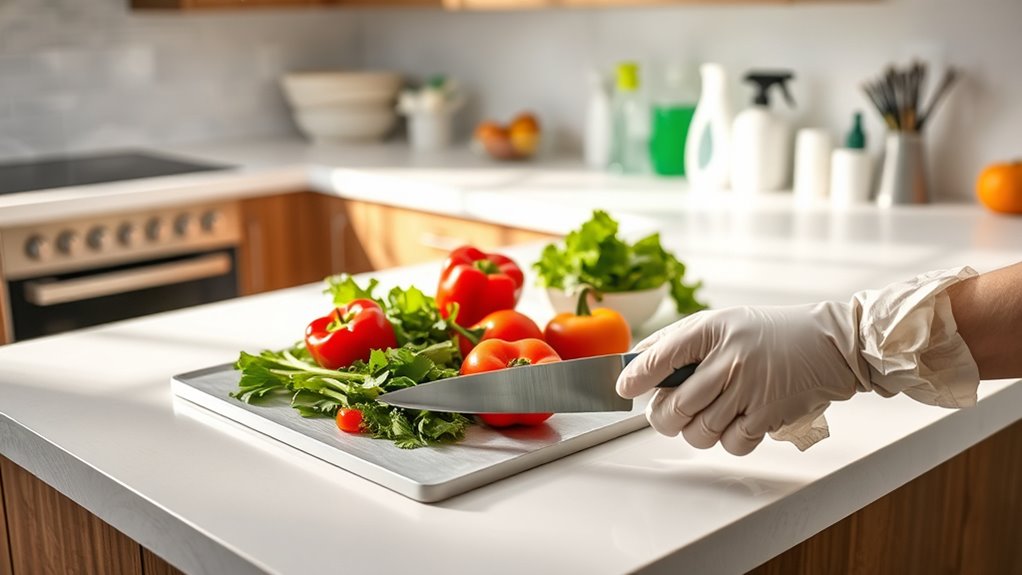

To avoid cross-contamination, practice proper hygiene by washing your hands thoroughly before handling food and after touching raw meat. Use separate cutting boards, utensils, and containers for raw meats and ready-to-eat foods, and clean all surfaces often. Store raw meats separately in sealed containers and on the lowest fridge shelves. Discard spoiled foods and keep leftovers properly stored. Continuing with these tips will help you understand more effective ways to keep your food safe.
Key Takeaways
- Wash hands thoroughly before handling food and after touching raw meat or bathroom use.
- Use separate cutting boards and utensils for raw meats and ready-to-eat foods.
- Store raw meats in sealed containers on the lowest refrigerator shelves to prevent leaks.
- Keep cooked and raw foods separate during storage, preparation, and serving.
- Discard spoiled or expired foods and clean surfaces regularly to prevent bacteria spread.

Cross-contamination occurs when harmful bacteria or viruses transfer from one surface or food to another, increasing the risk of foodborne illnesses. To prevent this, maintaining proper hygiene is essential. Always wash your hands thoroughly with soap and warm water before handling food, after touching raw meat, or using the bathroom. This simple step dramatically reduces the transfer of germs. Use clean utensils, cutting boards, and dishes, and avoid cross-contact by not using the same surfaces for raw meat and ready-to-eat foods without cleaning them first. Remember, bacteria can survive on surfaces for hours, so staying diligent with hygiene practices is necessary.
Proper hygiene, including handwashing and cleaning surfaces, is essential to prevent harmful bacteria transfer and cross-contamination.
Food storage plays a critical role in preventing cross-contamination. Store raw meats, poultry, and seafood separately from cooked foods, fruits, and vegetables. Keep raw meats in sealed containers or tightly wrapped in plastic to prevent their juices from leaking onto other foods. Place these items on the lowest shelves in your refrigerator to avoid drips contaminating other foods. Use different cutting boards or utensils for raw meats and produce to avoid transferring bacteria. When storing leftovers or prepped ingredients, ensure they’re covered and refrigerated promptly, ideally within two hours of cooking or purchase. Proper food storage not only keeps your food fresh but also minimizes the risk of bacteria spreading to other foods.
Be mindful when handling food during preparation. Always wash fruits and vegetables thoroughly before slicing or cooking. When working with multiple ingredients, clean your hands and utensils between tasks. For example, after chopping raw chicken, wash your hands before preparing vegetables. This prevents bacteria from transferring from raw meats to other foods. Keep cooked foods separate from raw ingredients, especially during assembly and serving. If you’re using a food prep area, disinfect countertops regularly, especially after preparing raw meat or seafood.
In addition, pay attention to expiration dates and storage guidelines. Properly stored food lasts longer and reduces the chance of bacteria multiplying. Use airtight containers for leftovers and leftovers within safe timeframes to prevent spoilage and cross-contamination. When in doubt, discard foods that are past their expiration date or show signs of spoilage, like an off smell or slimy texture.
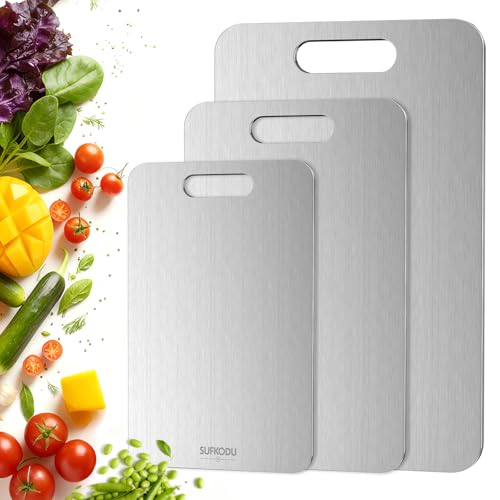
Titanium Cutting Board Set of 3, 100% Double-Sided Titanium Cutting Boards for Kitchen, Dishwasher Safe Non-Toxic Chopping Boards for Meat, Vegetables, Fruits, Raw and Cooked Food Prep (M+L+XL)
- Set Includes Three Sizes: 16×10, 13×8, 10.5×6.5 inches
- Double-Sided Design: Separate raw and cooked areas
- Made from 100% Titanium: Non-toxic, durable, and sturdy
As an affiliate, we earn on qualifying purchases.
As an affiliate, we earn on qualifying purchases.
Frequently Asked Questions
Can Cross-Contamination Occur in Non-Food Environments?
Yes, cross-contamination can occur in non-food environments too. You might encounter contamination sources like dirty tools, unclean surfaces, or improper cleaning protocols. When you don’t follow proper cleaning procedures, bacteria and other contaminants can spread from one area to another, risking health and safety. It’s essential to implement thorough cleaning protocols and regularly disinfect surfaces to prevent cross-contamination, even outside food-related settings.
What Are the Long-Term Health Effects of Cross-Contamination?
If you’re exposed to cross-contamination over time, it can weaken your long-term immune system and increase your risk of chronic illnesses. Persistent exposure to bacteria, viruses, or allergens may lead to ongoing health problems, such as respiratory issues or food allergies. Protect yourself by maintaining good hygiene and proper food handling, which helps prevent long-term health effects and keeps your immune system strong against future threats.
How Can Children Help Prevent Cross-Contamination at Home?
Like little detectives, children can help prevent cross-contamination at home by practicing good hygiene and kitchen safety. Encourage them to wash their hands thoroughly before handling food, keep raw meats separate from other ingredients, and use different utensils for different tasks. Remind them that their vigilance is crucial, like guards protecting a treasure, ensuring everyone stays safe and healthy while cooking and eating together.
Are Certain Foods More Prone to Cross-Contamination?
Certain foods, like raw meat, seafood, and unpasteurized dairy, are more prone to cross-contamination because they carry bacteria and allergens. When you handle these foods, be extra careful to prevent spreading germs or allergens to other items. Always wash your hands, use separate cutting boards, and clean utensils thoroughly. Proper food handling reduces the risk of food allergies and bacterial contamination, keeping your kitchen safe and healthy.
How Do Commercial Kitchens Minimize Cross-Contamination Risks?
You can reduce cross-contamination risks in commercial kitchens by strictly following sanitation protocols and prioritizing staff training. Studies show that properly trained staff reduce contamination incidents by up to 50%. You should implement color-coded cutting boards, enforce handwashing, and regularly sanitize surfaces. Ensuring staff understands and adheres to these protocols is essential, as consistent training keeps everyone aware of best practices, ultimately safeguarding your customers and maintaining food safety standards.
Conclusion
To keep your food safe, always practice good hygiene and separate raw and cooked items. Did you know that cross-contamination causes about 48 million cases of foodborne illness in the US each year? By being mindful and following simple steps, you can considerably reduce your risk. Remember, a clean kitchen is a safe kitchen. Stay vigilant, and enjoy your meals without worry—your health depends on it!